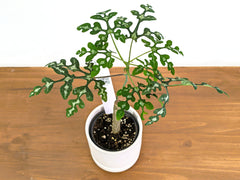
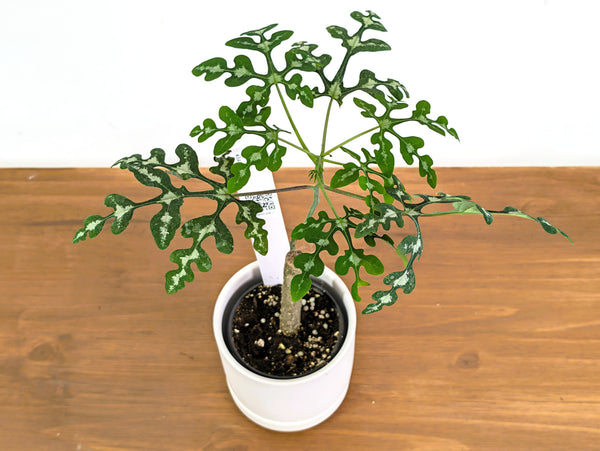
Only 1 left
Adenia Perrieri
$299.00
Care guide · Caudex
Adenia perrieri · the passionflower family
A caudiciform plant from the seasonally dry forests of Madagascar. Its swollen caudex stores water, and each season it sends up vines with lobed leaves. Give it bright light, warmth and a careful hand with water, easing off when it goes dormant.
Advanced
Needs a dedicated setup
Likely toxic to pets
The genus carries cyanide compounds. Keep it out of reach.
Pet safety
Why we list it as toxic
Adenia isn't on the ASPCA list. But the genus is known for cyanogenic glycosides, compounds that release cyanide when the plant is chewed. Studies on Adenia species found them in the leaves, stems and caudex. Until there's a pet-specific record, we treat it as toxic.
Sources: FAO AGRIS study on Adenia volkensii; PROSEA (Plant Resources of South-East Asia); Onderstepoort Journal of Veterinary Research.
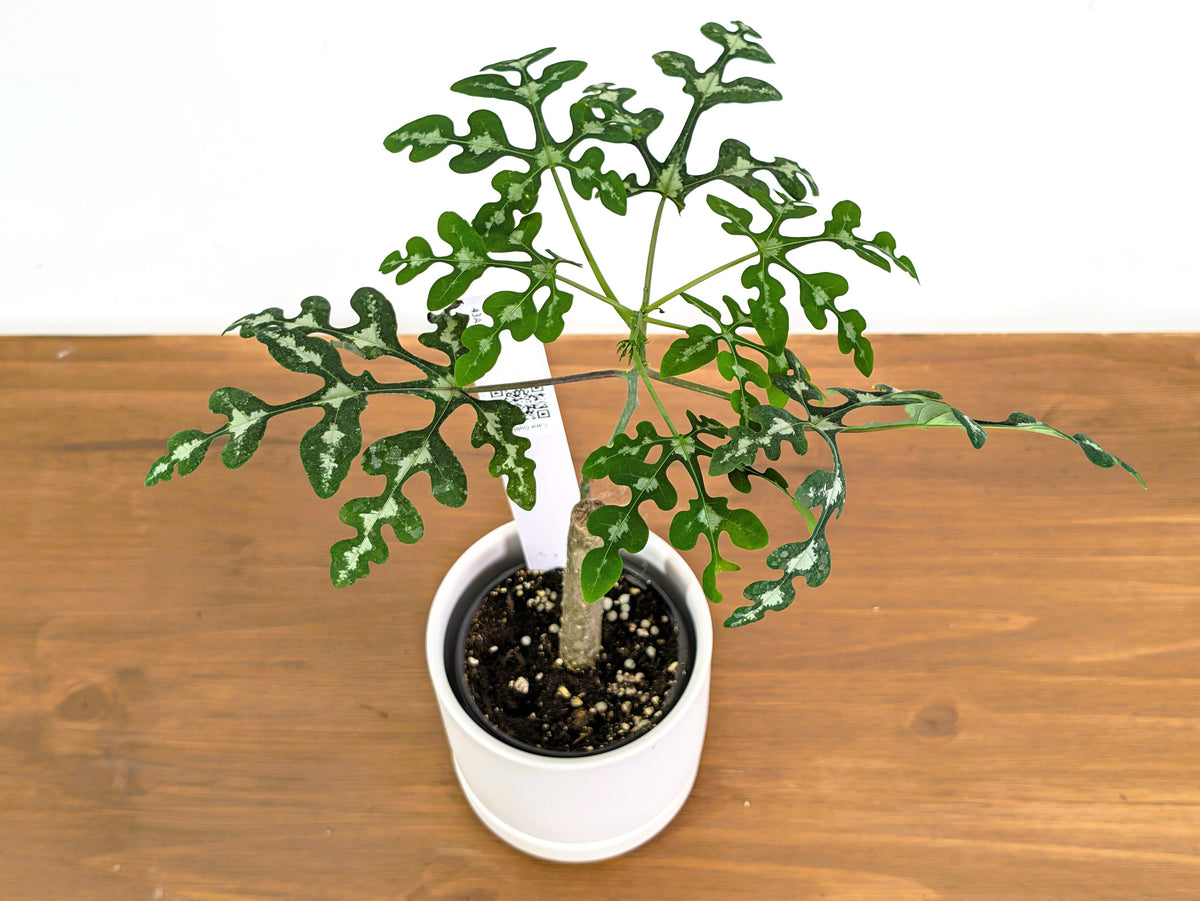
The swollen base holds water through dry seasons.
It grows vines in the warm season and may drop them to rest.
Adenia species are toxic. Wear gloves when you prune.
Give it bright light with a few hours of direct sun, like a south or west window. More light keeps the vines compact and the caudex healthy.
Long, weak vines mean more light
While it's in leaf, water when the mix is dry and let it drain fully. When it drops its leaves to rest, water very little. The caudex rots if it stays wet.
A soft caudex means too wet
Low to average household humidity suits it. Good air flow matters more than humidity.
Spots in damp, still air
Use a fast-draining mineral mix: cactus mix with plenty of pumice or grit, in a pot with drainage holes. Keep the caudex above the soil line.
Mix that stays damp around the caudex
Keep it at 65–90°F and above 50°F. Feed a diluted cactus fertilizer a few times while it's in active growth.
Leaf drop when it gets cold
Safety
All Adenia species are considered toxic, sap included. Handle it with care and keep it away from pets and kids.
When pruning or repotting
Wipe sap off blades afterward
Out of reach of pets
Pick what you see. Each answer says what's going on and what to do next.
Rot from too much water, especially while dormant. Let it dry and check for soft spots.
Usually dormancy. Water very little until new growth starts, and keep it warm and bright.
Not enough light. Move it to a south or west window with some direct sun.
Often too much water. Let the mix dry between waterings and check the caudex for soft spots.
The half-page care card
Every Adenia ships with one. Lost it? Print a fresh copy.
Printable coming soon
The Adenia field journal
Two pages: the full routine, a symptom checker and a leaf log to track new growth.
Get it with the club


Join the club for 15% off, a birthday discount and first dibs on new drops.
You're in. Your 15% code is on its way to your email.
Change how the site looks and sounds on this device. Your choices stay on while you shop.
Adds a small button to the corner of each page so these settings are always one tap away.
Display
Reading aids
Uses your device's built-in voice. Select some text first to hear only that part.
Get a written description of a plant photo. The photo is sent to our description service, nothing else.
