
Exact plant
Epipremnum Aureum Manjula 'Poosin' Pothos
From $49.00
Care guide · Pothos
Epipremnum spp. · the aroid family
Pothos and their relatives climb trees in the tropical forests of Southeast Asia and the western Pacific. Indoors they trail or climb, tolerate a lot and grow fast. Rarer forms like Manjula and giganteum marble just want a little more light.
Beginner
Easygoing care
Toxic to cats & dogs
Out of paws’ reach – especially chewers
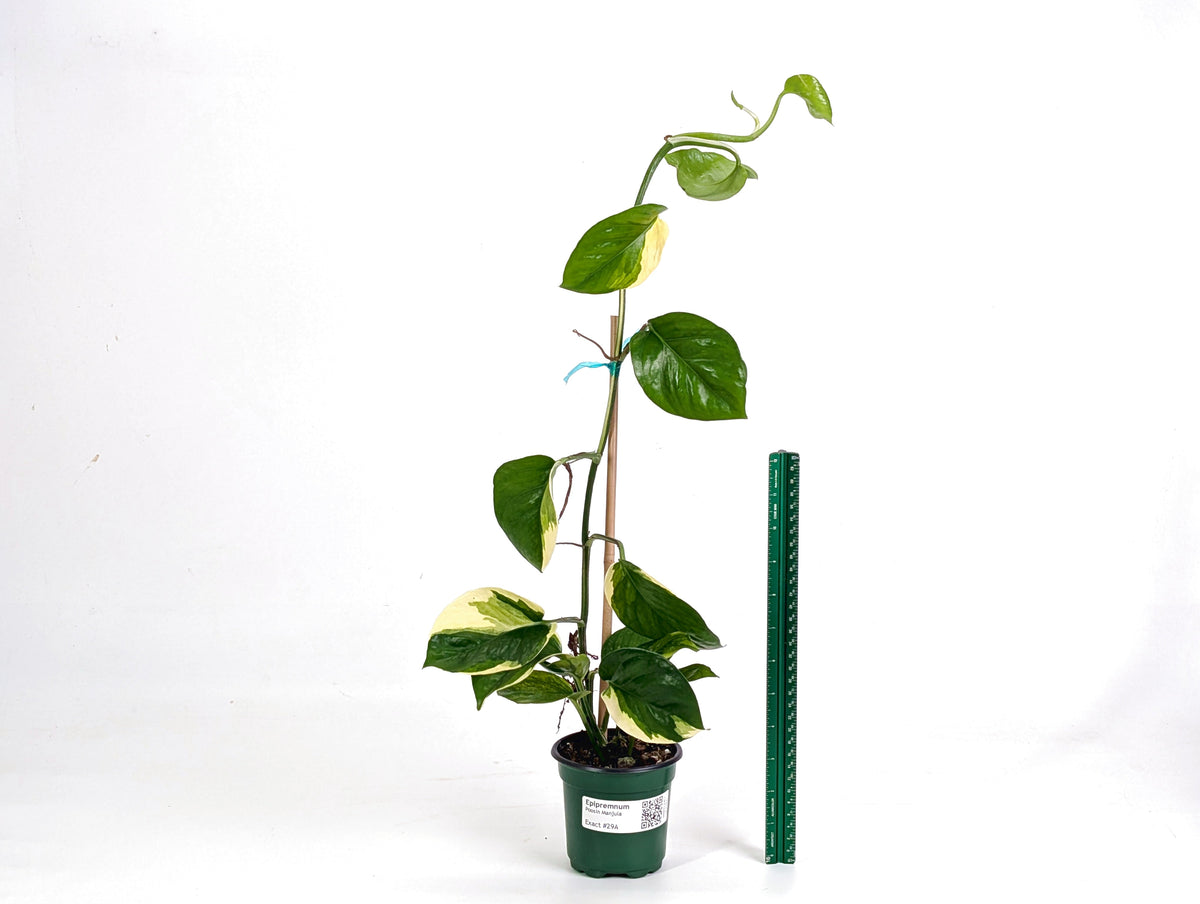
It trails or climbs, and grows quickly in good light.
White and cream sections fade in low light
It handles missed waterings and average air
Pothos tolerate medium light, but bright, indirect light keeps variegated forms like Manjula crisp and the vines full. An east window or a spot back from a south or west window is ideal. Direct afternoon sun scorches the pale sections.
Variegation fading and long gaps mean more light.
Water when the top half of the soil is dry, then water thoroughly and let it drain. A gentle droop is its sign of thirst and it perks up fast. Constantly wet soil is the main way to lose one.
Yellow leaves and black stems mean too wet
Normal household humidity of 40–60% suits it. More humidity gives bigger leaves, especially on a pole, but it isn't required.
Brown, crispy edges in very dry air
Use a well-draining mix of potting soil with perlite and a little orchid bark, in a pot with drainage holes. Repot every 1–2 years.
Soil that stays wet for days
Keep it at 65–85°F, never below 60°F. Feed monthly at half strength in spring and summer, and pause in winter.
Slow, pale growth without feeding
Good to know
Like most aroids, pothos make bigger, more mature leaves when they climb instead of trail.
Moss or coir, as tall as you'll allow
Soft ties, aerial roots toward the pole
A moist pole helps roots grip
Pick what you see. Each answer says what's going on and what to do next.
Thirsty. Water thoroughly and it should perk up within hours.
Usually soil that stays wet. Let the top half dry out between waterings and check the drainage.
Not enough light. Move it to bright, indirect light and new leaves will come in with more color.
Low light or no support. Move it brighter, trim long vines and give it a pole to climb.
The half-page care card
Every pothos ships with one. Lost it? Print a fresh copy.
Printable coming soon
The pothos field journal
Two pages: the full routine, a symptom checker and a leaf log to track new growth.
Get it with the club


Join the club for 15% off, a birthday discount and first dibs on new drops.
You're in. Your 15% code is on its way to your email.
Change how the site looks and sounds on this device. Your choices stay on while you shop.
Adds a small button to the corner of each page so these settings are always one tap away.
Display
Reading aids
Uses your device's built-in voice. Select some text first to hear only that part.
Get a written description of a plant photo. The photo is sent to our description service, nothing else.
