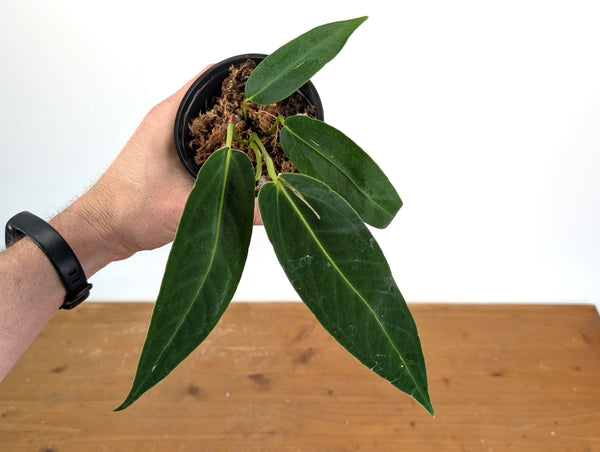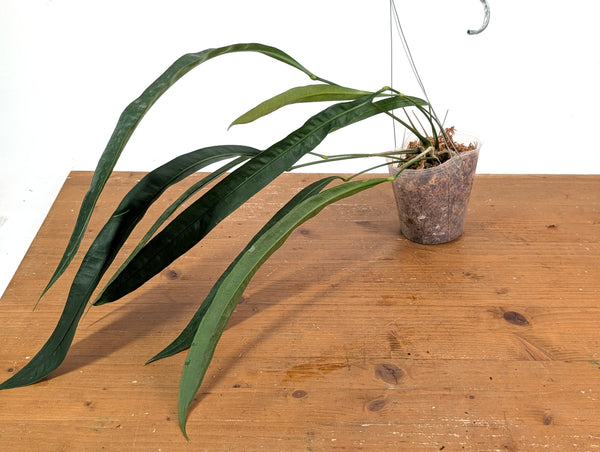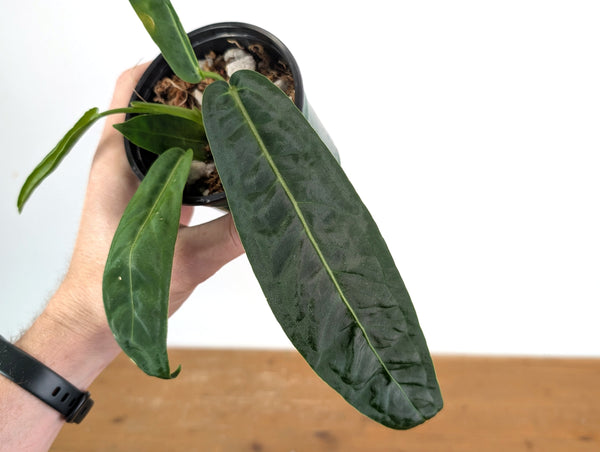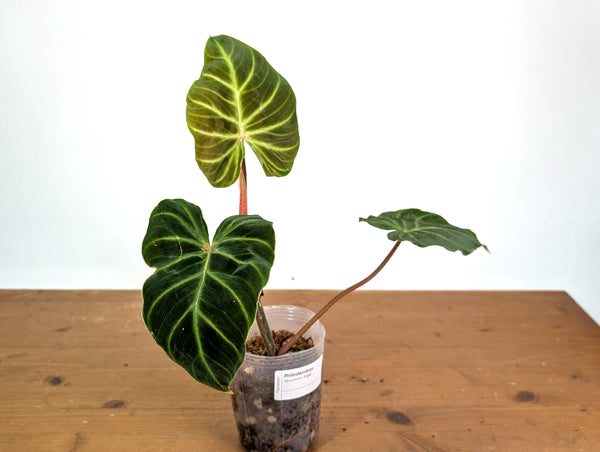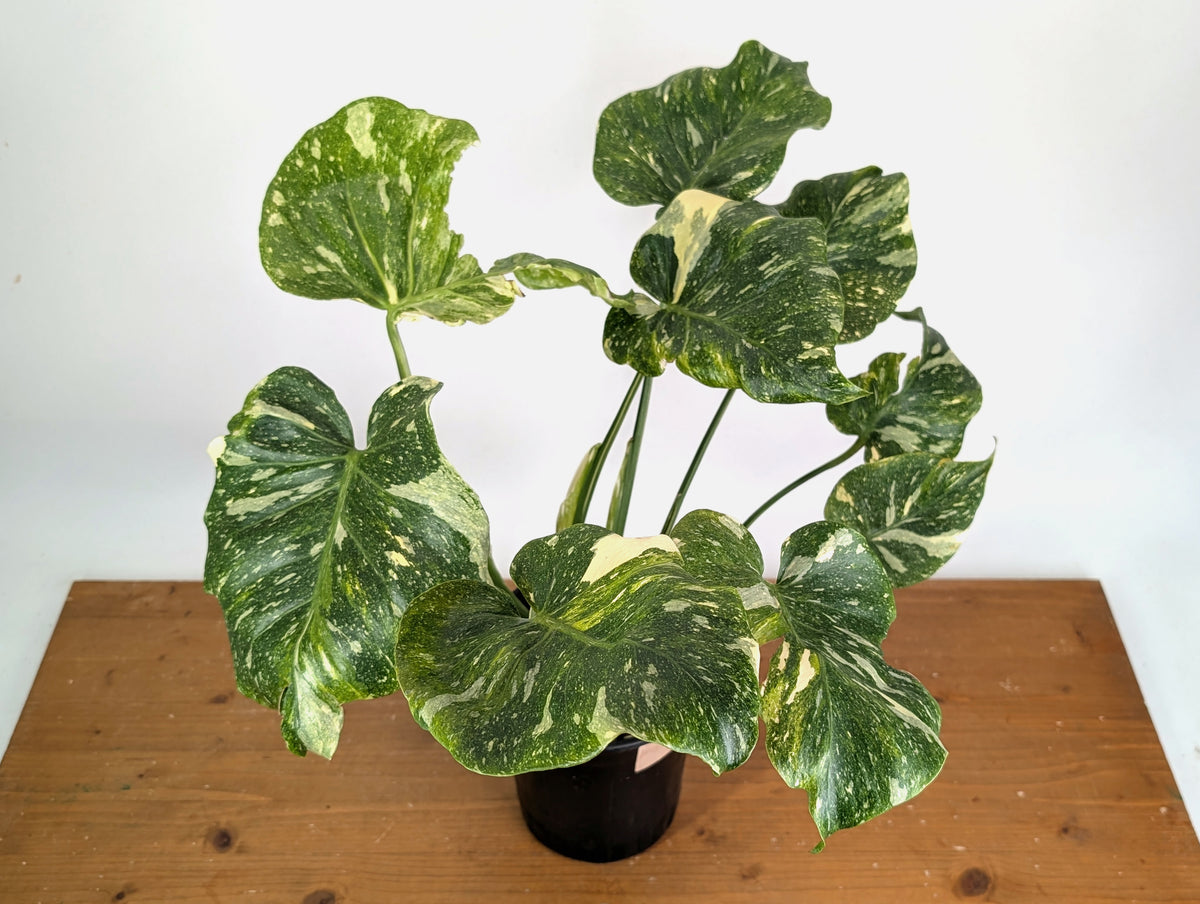
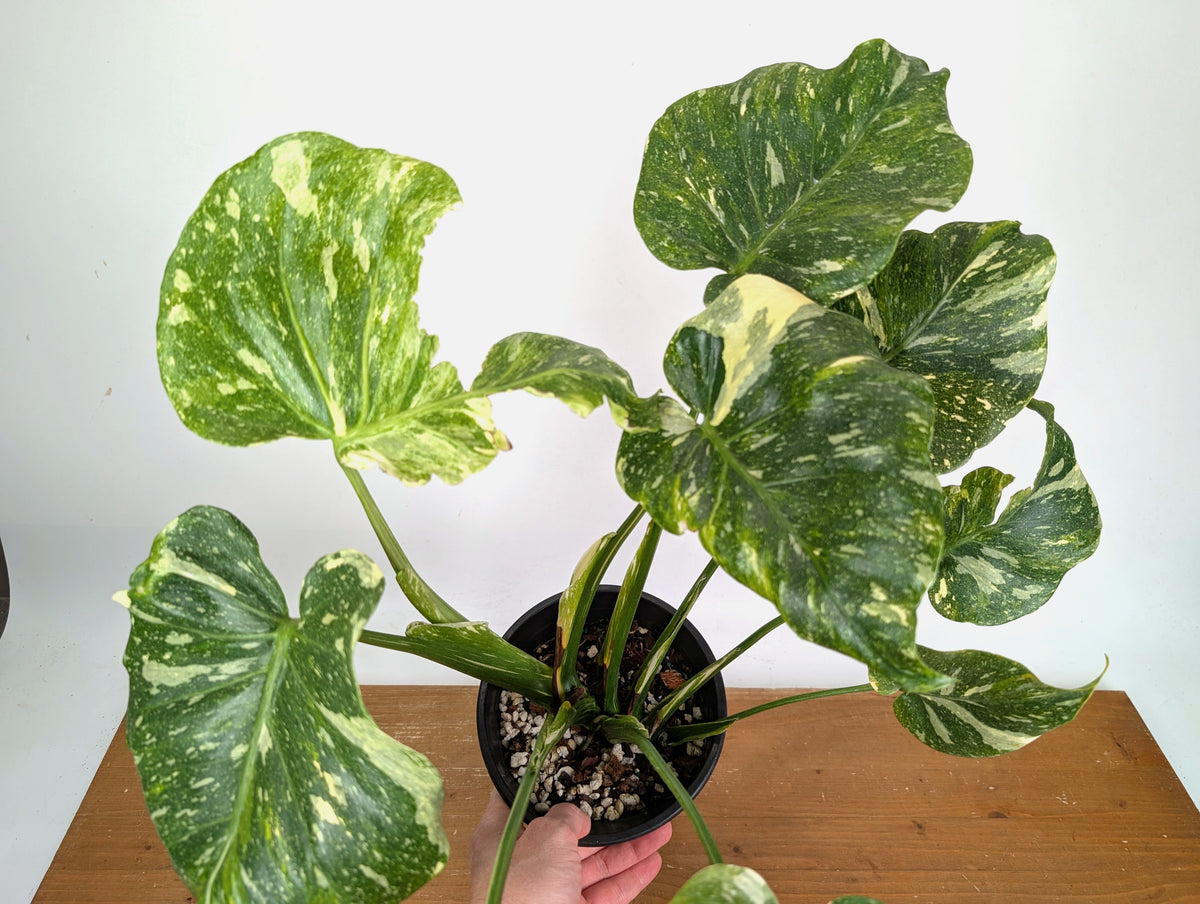
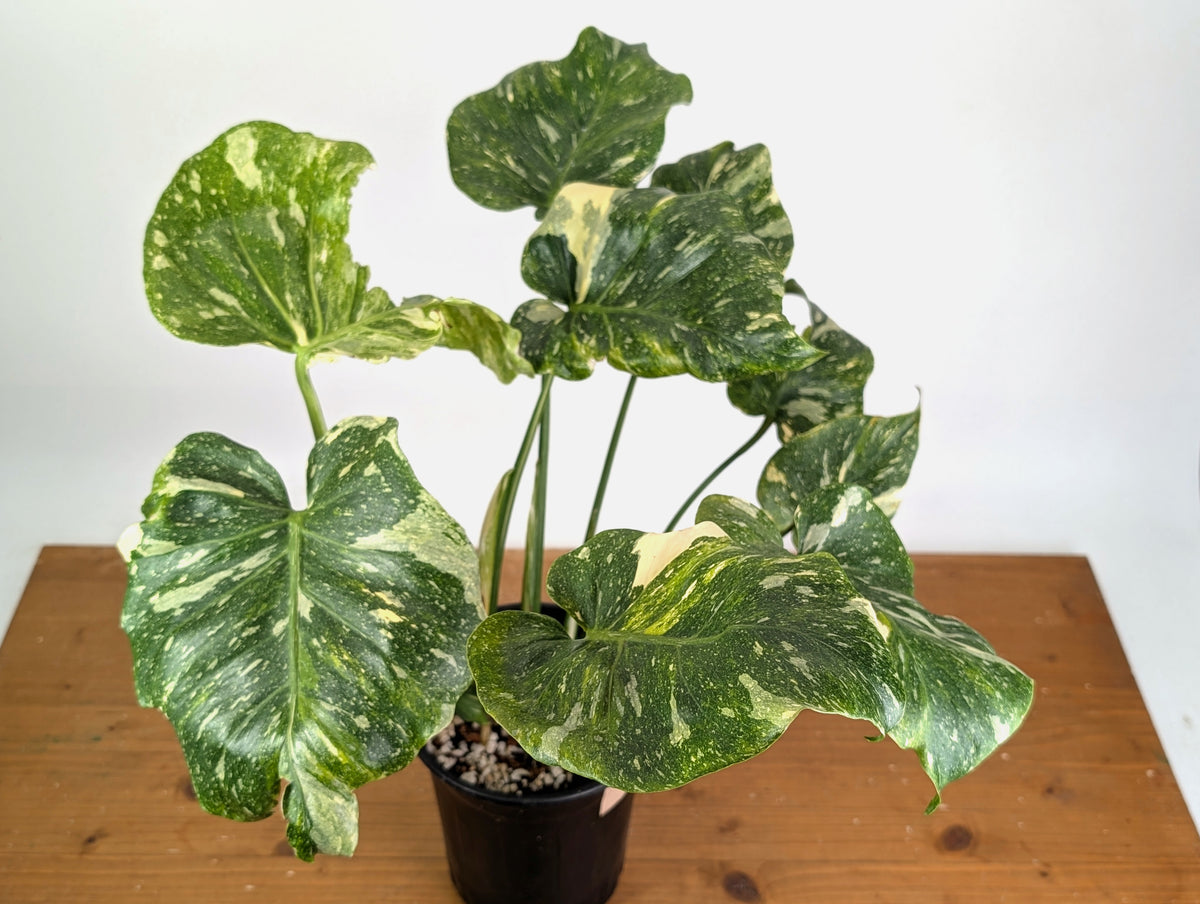
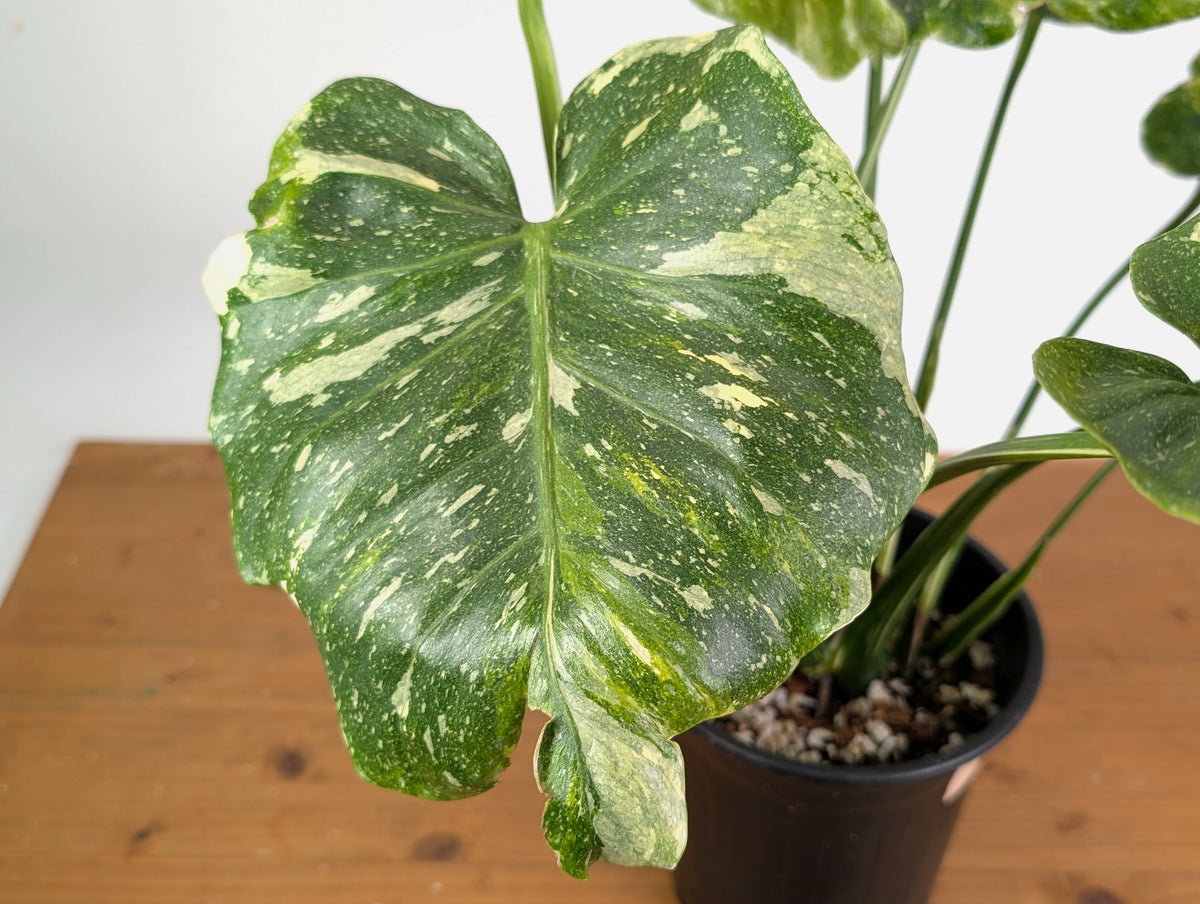
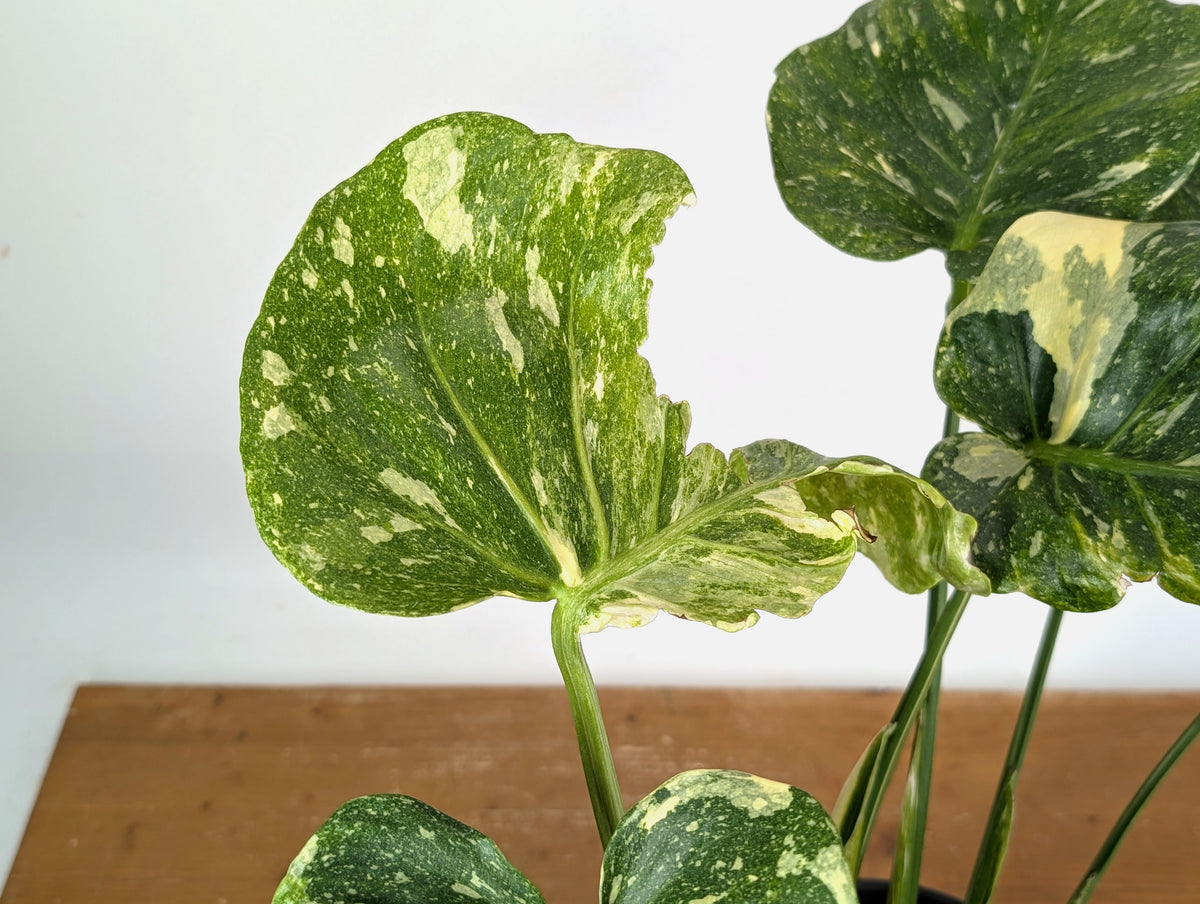
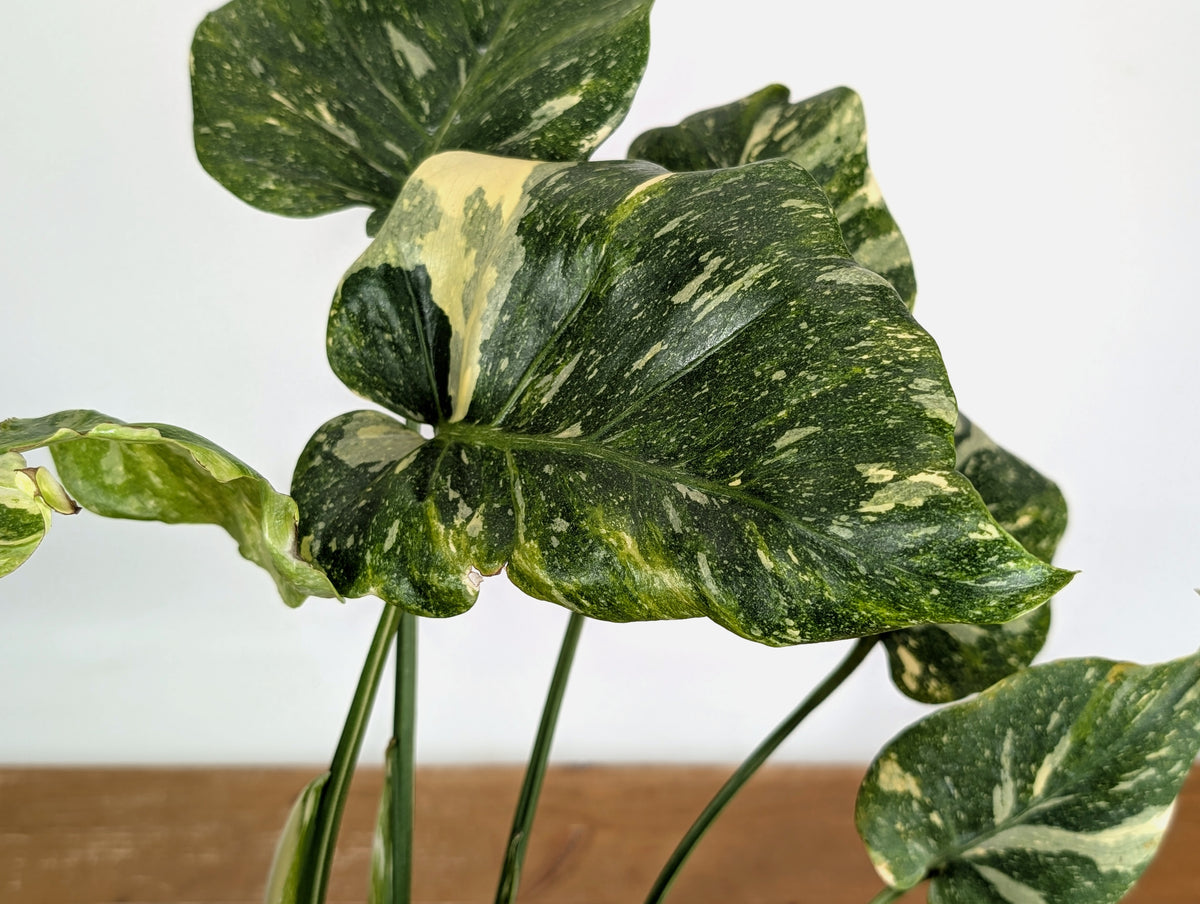
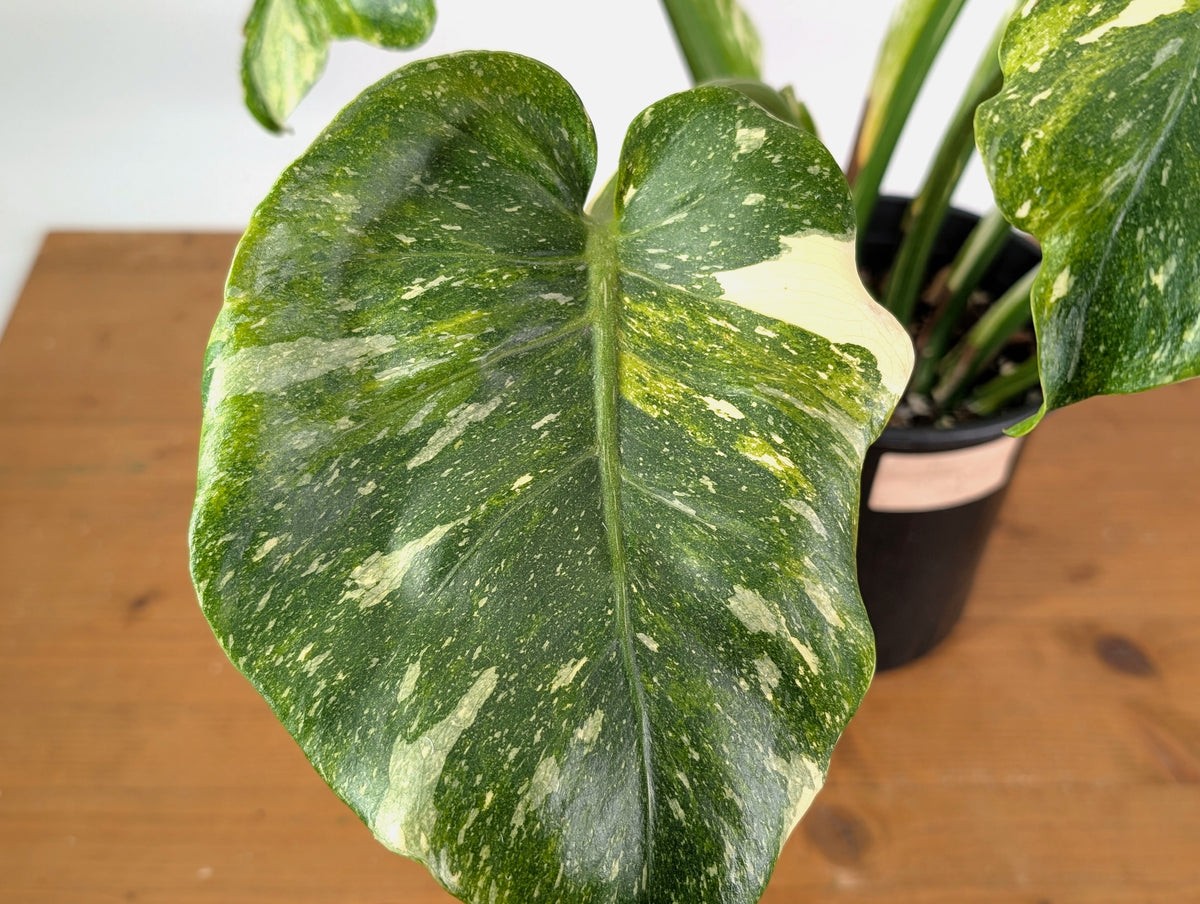
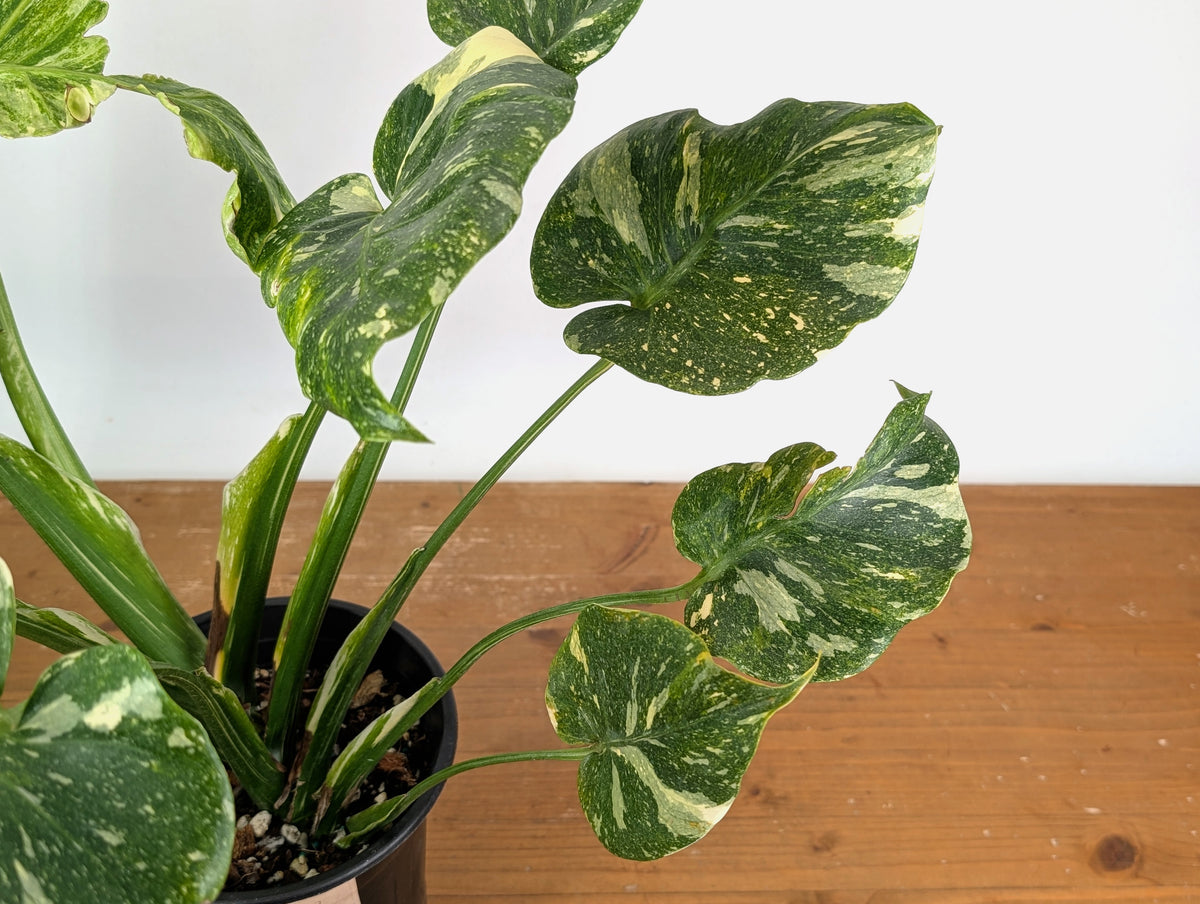
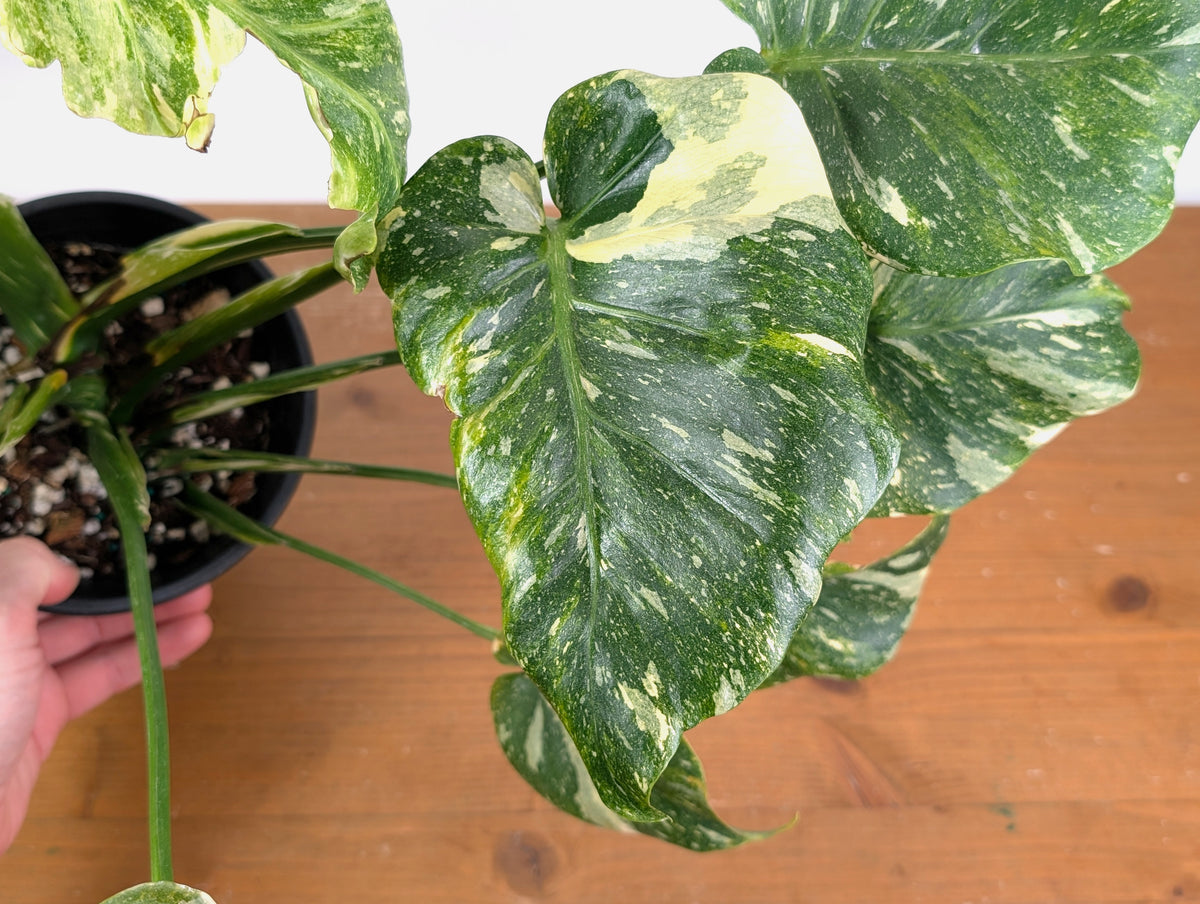
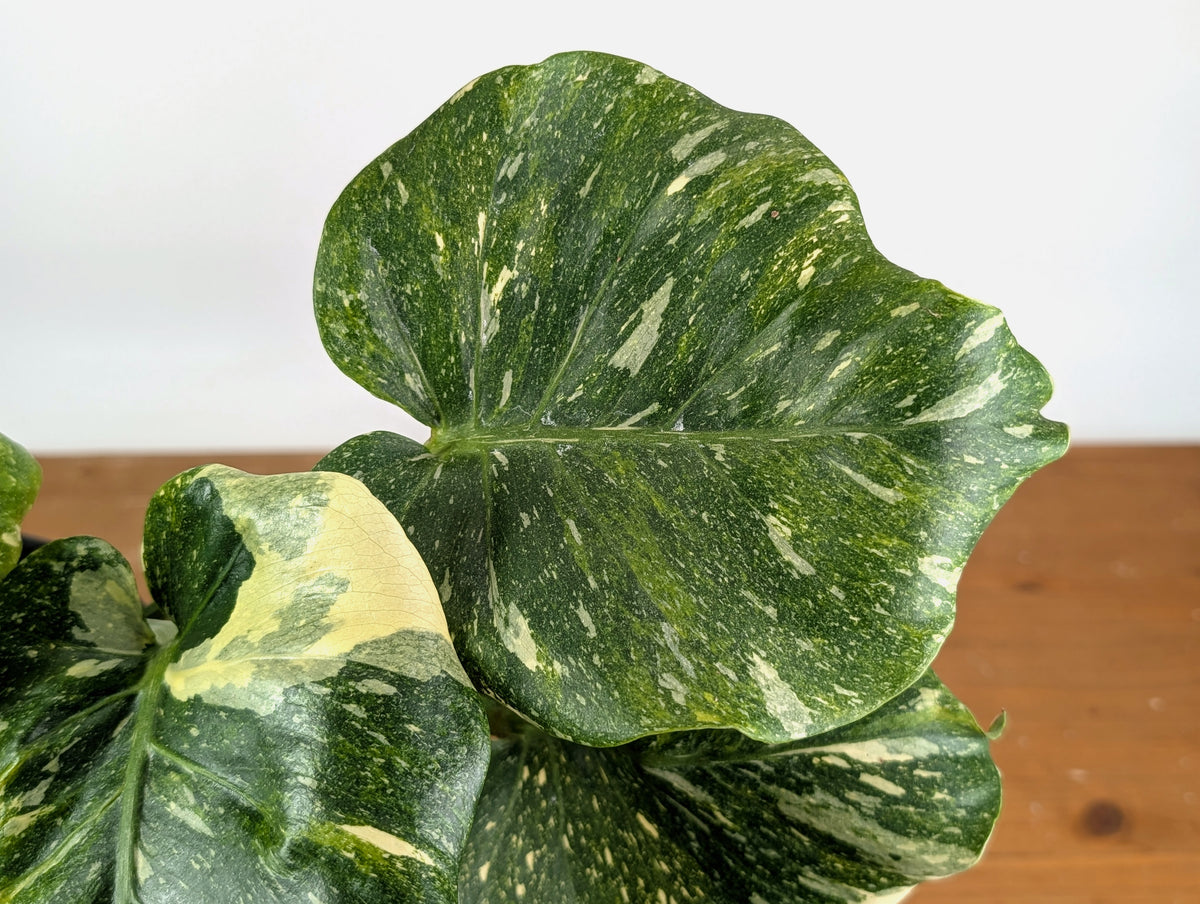
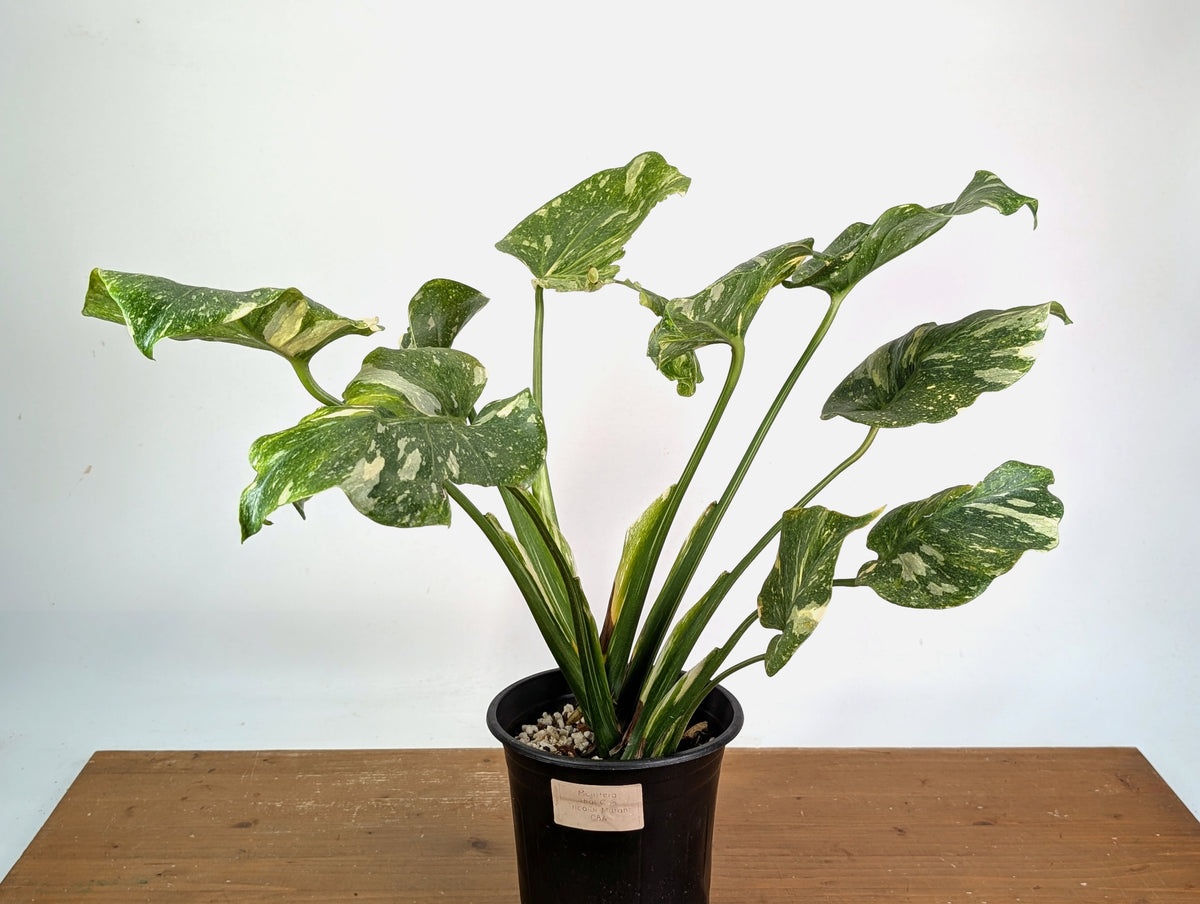

An extraordinary and exceptionally rare selection within the already celebrated Thai Constellation lineage, the Tricolor takes the classic creamy-white variegation of the standard Thai and adds a third dimension — sectors and zones of soft yellow and pale lime green layered alongside the familiar off-white speckles and marbling, creating a genuinely tricolored leaf that is unlike anything else in the Monstera world. Where the standard Thai Constellation is beloved for its stable, tissue-culture-derived variegation and reliable patterning, the Tricolor pushes that foundation into new chromatic territory, with each leaf presenting a unique interplay of deep green, cream, and warm yellow that shifts and surprises with every new unfurling. Still vanishingly rare in cultivation and commanding significant prices even by collector standards, this is a true grail-level plant — one that represents the cutting edge of what variegated Monstera cultivation has produced. A long-term centerpiece specimen that will only become more spectacular as it climbs and matures.
Light Bright indirect light is essential and non-negotiable for a plant carrying this much non-photosynthetic tissue. All three variegated color expressions — cream, yellow, and lime — are dependent on adequate light to remain vivid and well-expressed in new growth. Insufficient light causes rapid greening and a collapse of the tricolor effect that makes this plant extraordinary. Avoid direct sun, which scorches the lighter sectors with particular speed. A bright east-facing window or filtered light from a strong south or west exposure is ideal.
Water Water thoroughly when the top inch or two of the medium has dried out. With significant portions of each leaf unable to photosynthesize, this plant is more sensitive to watering stress than a fully green Monstera. Consistency is critical — both chronic overwatering and repeated drought cycles will accelerate browning and tissue breakdown in the variegated sectors. Ensure impeccable drainage and never allow standing water at the roots.
Humidity Prefers humidity of 65% or higher. The cream and yellow sectors are particularly vulnerable to browning and desiccation in dry air, and given the rarity and value of this plant, maintaining adequate humidity is not optional. A dedicated humidifier is strongly recommended. Avoid placement near heating vents, air conditioning, or any source of dry, moving air.
Soil / Medium A very chunky, well-aerated aroid mix is essential — coarse orchid bark, perlite, and coco coir in generous proportions. The root system of a mature Thai Constellation is vigorous and demands excellent airflow and drainage. Compacted or moisture-retentive soils are a significant risk factor for root rot, which in a plant of this value is a devastating outcome.
Fertilizer Feed with a balanced liquid fertilizer at half strength every 2–4 weeks during active growth. The high proportion of non-photosynthetic tissue means this plant works harder than a green Monstera to generate the energy needed for growth, making consistent nutrition particularly important. Flush the medium periodically to prevent salt buildup and reduce feeding in winter when growth slows.
Temperature Thrives in warm conditions between 65–85°F (18–29°C). Do not expose to temperatures below 55°F (13°C). The cream and yellow variegated sectors are acutely sensitive to cold stress and can blacken or collapse rapidly when exposed to drafts or temperature drops. Keep well away from cold windows and air conditioning vents.
Pests Thrips are the gravest concern — damage to the irreplaceable variegated sectors is permanent, and a thrips infestation on a plant of this caliber is a serious and costly problem. Spider mites, scale, and mealybugs are also common. A rigorous preventative spray rotation is not merely advisable but essentially mandatory for a collector plant at this level. Inspect every new leaf as it unfurls, when it is most vulnerable, and treat at the absolute first sign of activity.
Toxicity Toxic to humans and pets if ingested, containing calcium oxalate crystals that cause irritation and swelling of the mouth, throat, and digestive tract. Keep out of reach of children and animals.
Propagation Propagate by stem cuttings taken just below a node, ideally with an aerial root included. Root in water, sphagnum moss, or a moist aroid mix in a warm, humid environment. As with all Thai Constellation variants, the variegation is tissue-culture derived and generally stable, meaning cuttings are more likely to reproduce the tricolor patterning than chimeric cultivars would be — though the precise ratio and distribution of the three color zones will vary between individual leaves and cuttings. Given the value of this plant, most collectors are understandably reluctant to cut it until a robust, multi-stemmed specimen has been established.
Monstera Tricolor Thai Constellation Mutatio - Exact Plant #08A
Every live plant is unique. Your plant will be cared for like it's our own and selected especially for you. Plants may arrive with minor cosmetic imperfections such as creases, tears, or discoloration from shipping stress. Please allow up to 30 days for your plant to acclimate before repotting.
Plants listed as "EXACT" in the title will be the exact plant pictured. Feel free to contact us with any questions before placing your order — we're here to make your experience easy and enjoyable.
Ships in 3–5 business days via UPS Ground. Expedited delivery options are available at checkout.
Cold protection packaging is available for orders shipping to colder climates — add it here.