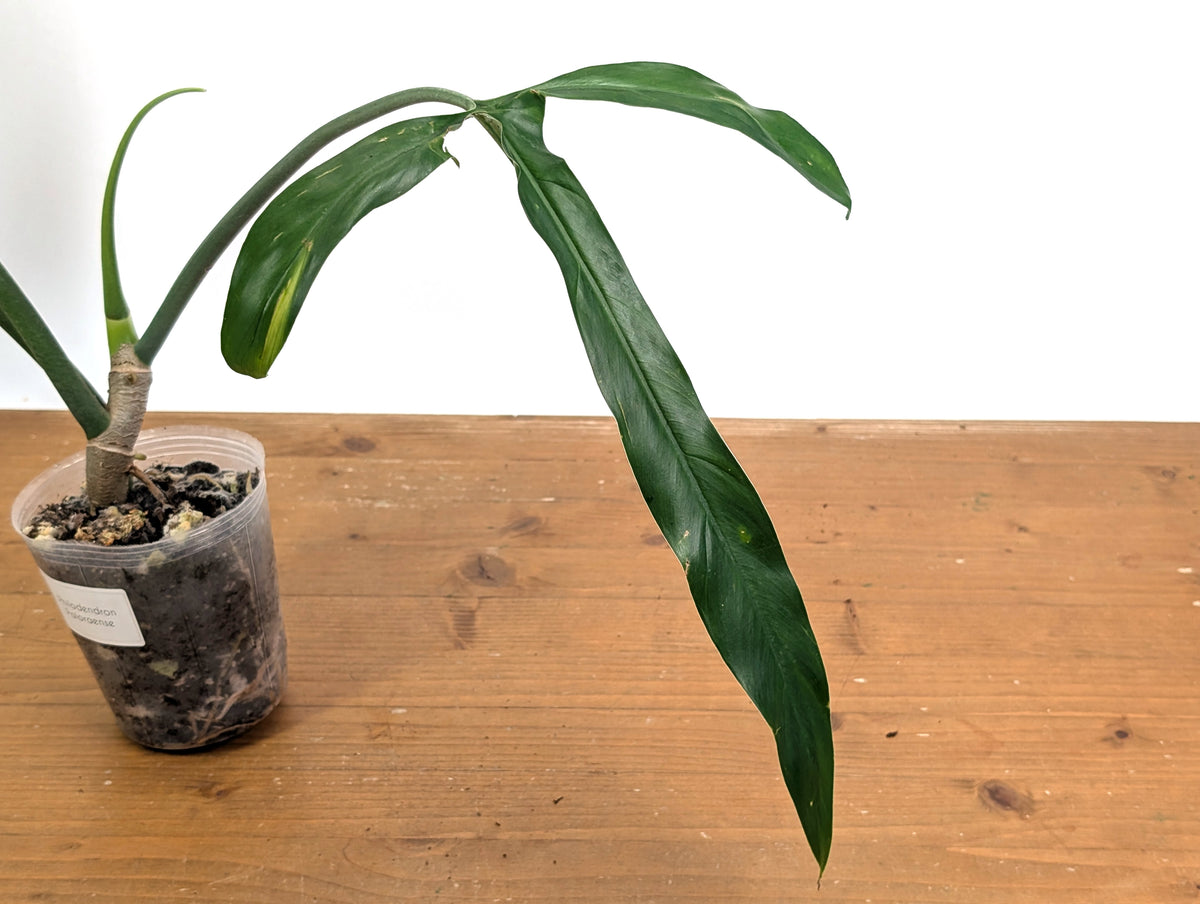
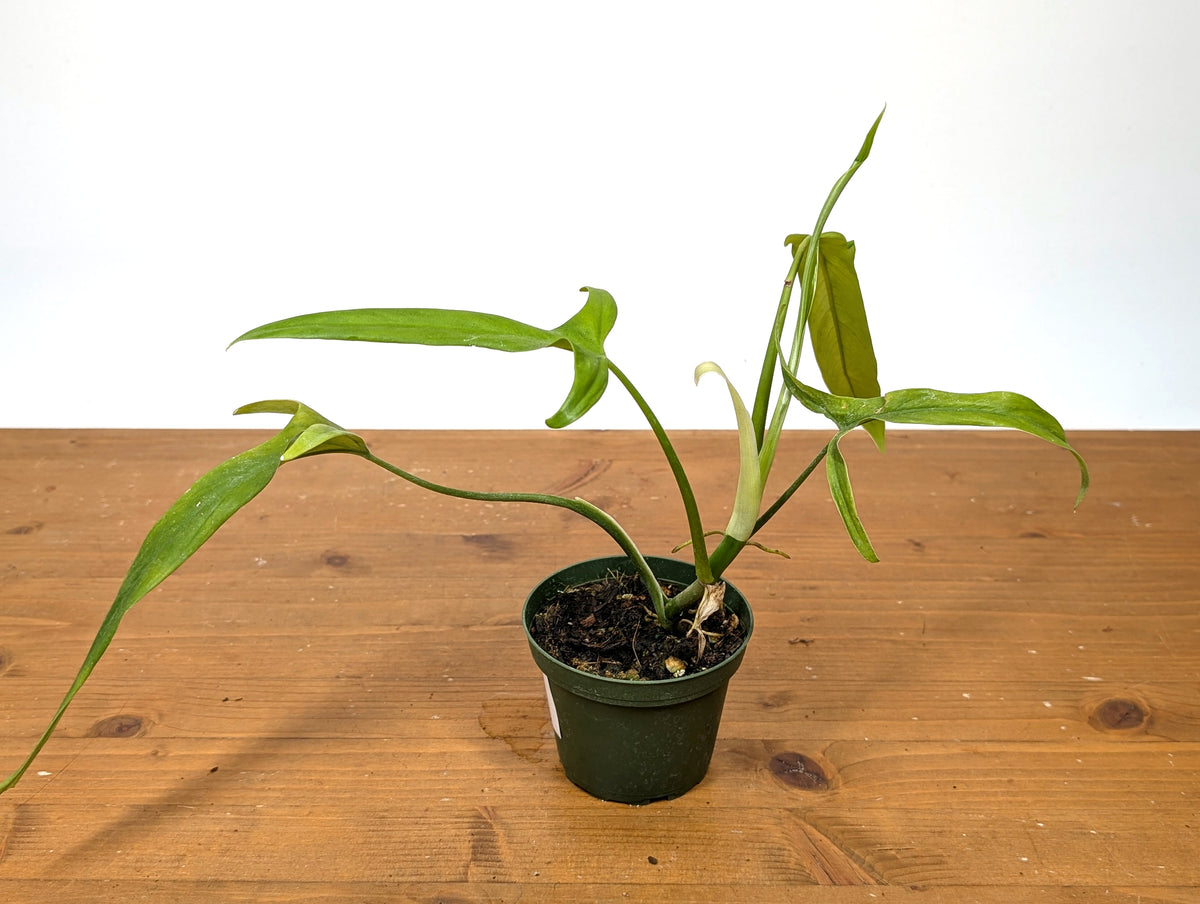
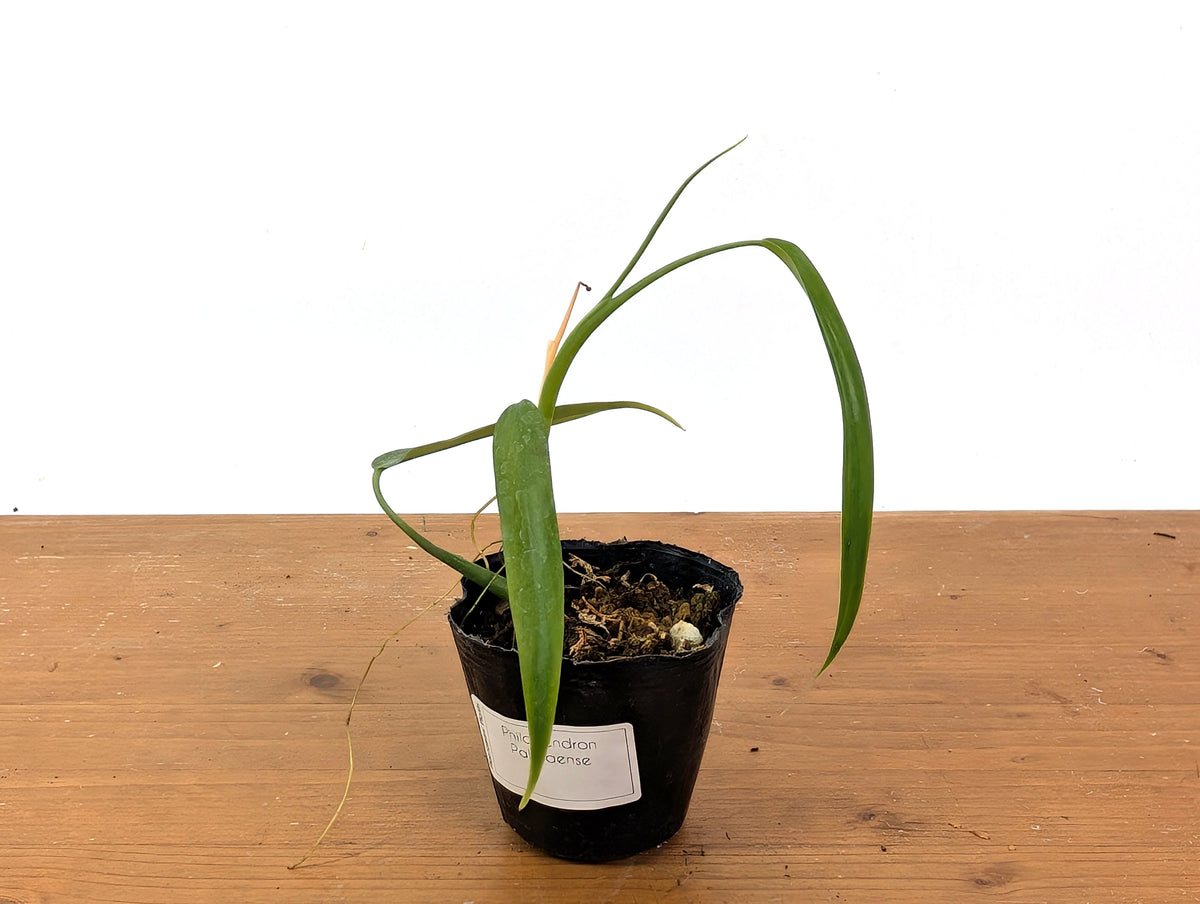
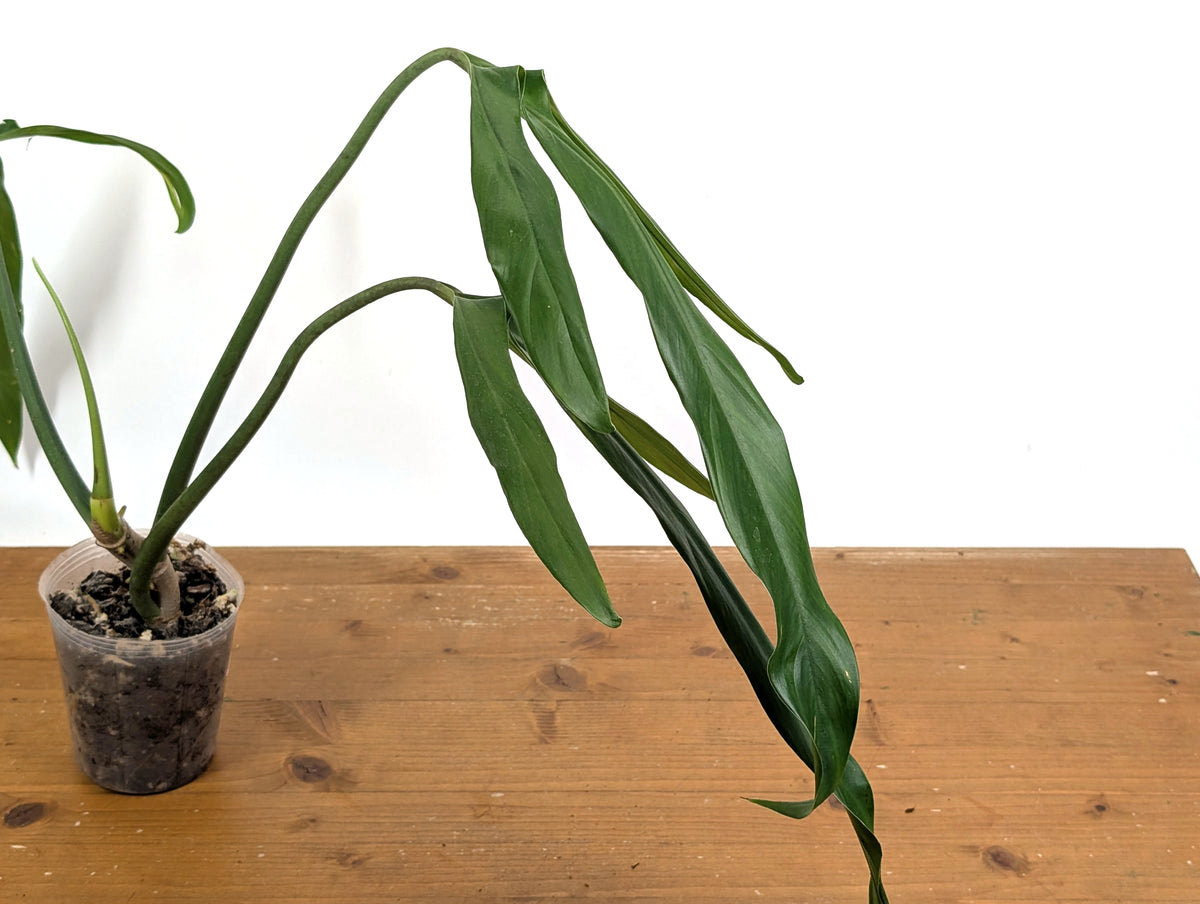

Philodendron Paloraense Philodendron paloraense
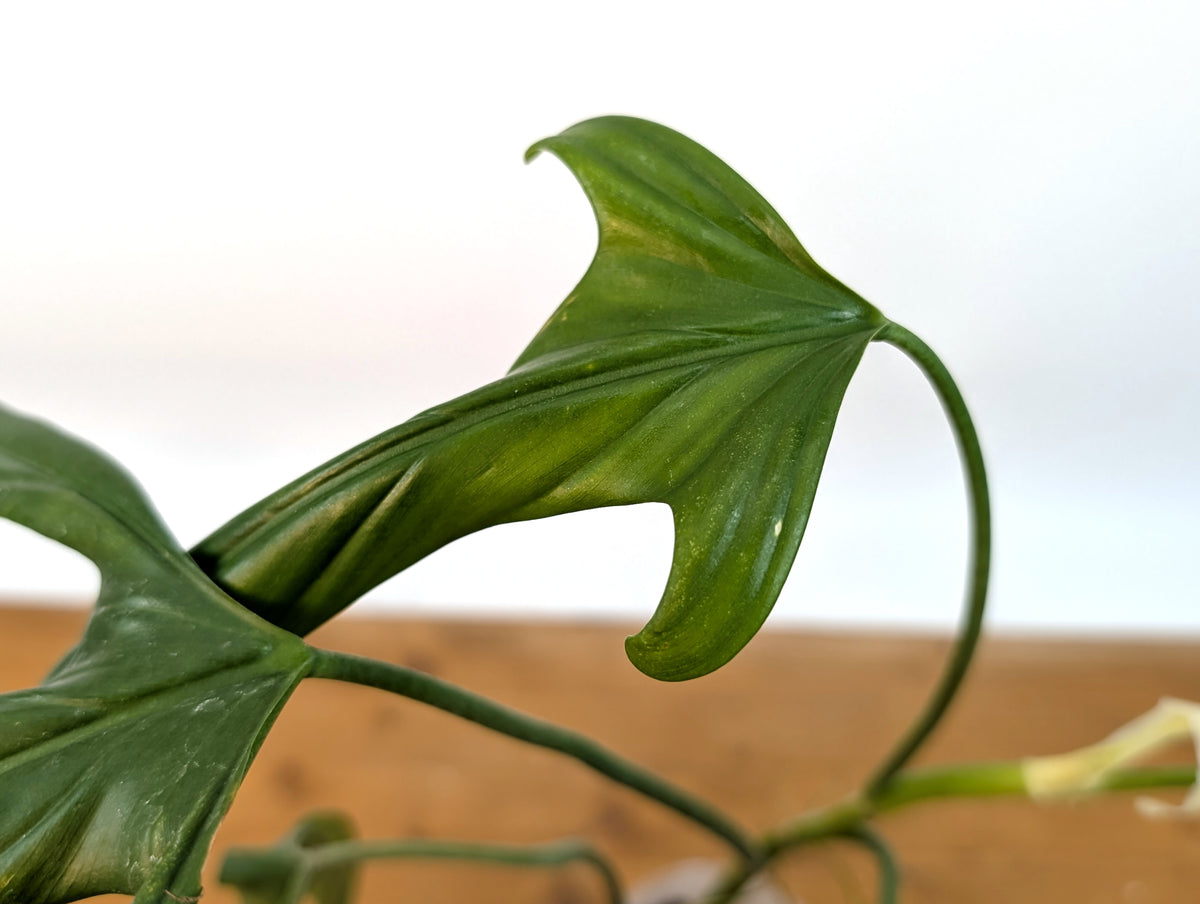
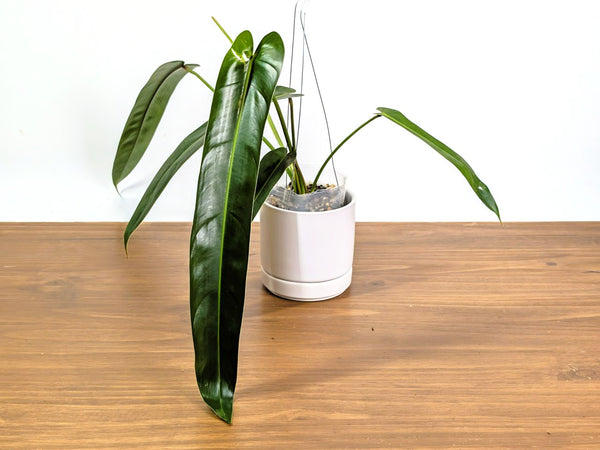
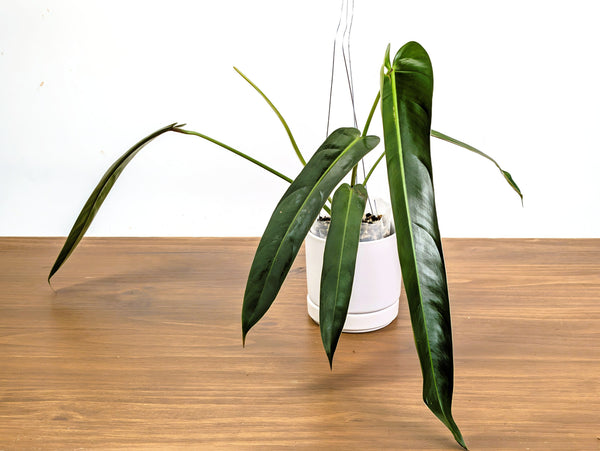
A rare hemiepiphytic climber native to the cloud forests of Ecuador, named for the Palora canton of Morona-Santiago province where it was collected. It produces elongated, deeply serrated leaves with a distinctive silvery-blue to blue-green hue that develops under good light — a coloration unusual in the genus and one of its primary identifying features. Related to P. holtonianum in its trisect leaf form, and develops increasingly dramatic lobing and silvery coloration as it climbs and matures.
-
Light: Bright indirect light; the silvery-blue leaf coloration is most vivid under consistent good indirect light. Avoid direct sun which scorches the foliage.
-
Soil: Chunky, well-draining aroid mix of orchid bark, perlite, and coco coir; excellent drainage and aeration essential. Never waterlogged.
-
Temperature/Humidity: Warm temperatures between 65-79°F; high humidity of 60-80% with good air circulation to prevent fungal issues.
-
Watering: Allow the top 1-2" of medium to dry between waterings; keep evenly moist but never soggy. Never waterlog.
-
Fertilizer: Feed with a balanced liquid fertilizer every 4 weeks during active growth; consistent feeding supports the fastest development of the characteristic mature leaf form. Reduce in winter.
Philodendron Paloraense
Every plant is unique. Your plant will be cared for like it's our own and selected especially for you. Plants may arrive with minor cosmetic imperfections such as creases, tears, or discoloration from shipping stress. Please allow up to 2-3 weeks for your plant to acclimate before repotting.
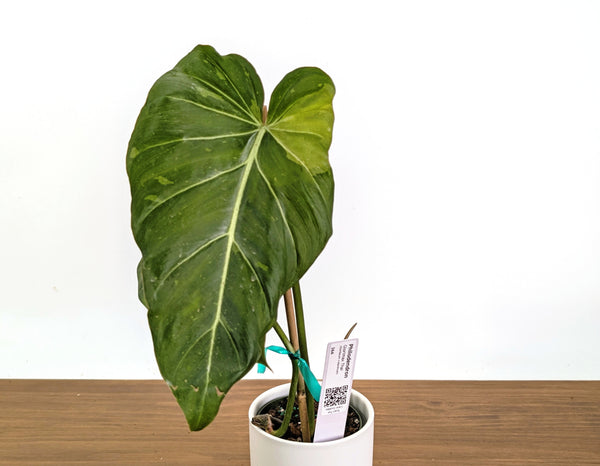
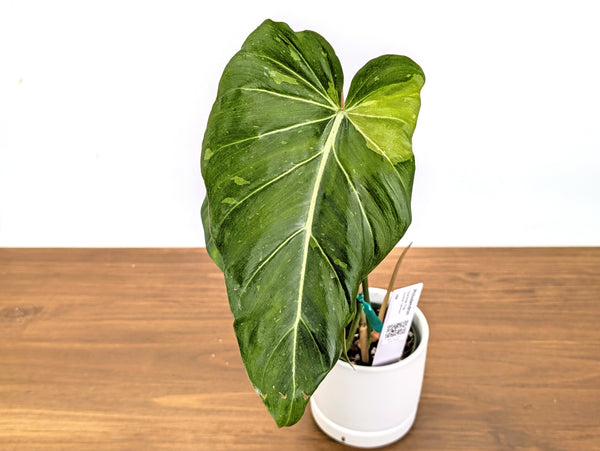
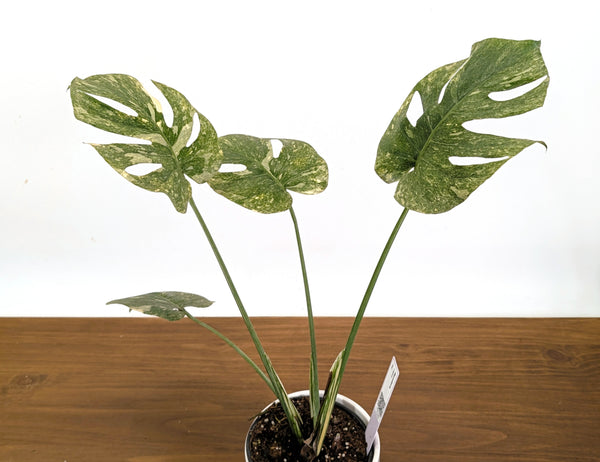
Plants listed as "EXACT" in the title will be the exact plant pictured. Decorative pots pictured are not included, plants ship in plastic nursery pots unless otherwise noted.
Feel free to contact us with any questions before placing your order — we're here to make your experience easy and enjoyable.
Ships in 3–5 business days via UPS Ground. Expedited delivery options are available at checkout. 2 Day Air is recommended for all plant orders outside of southeast USA for safe delivery.
Cold protection packaging is available for orders shipping to colder climates — add it here.
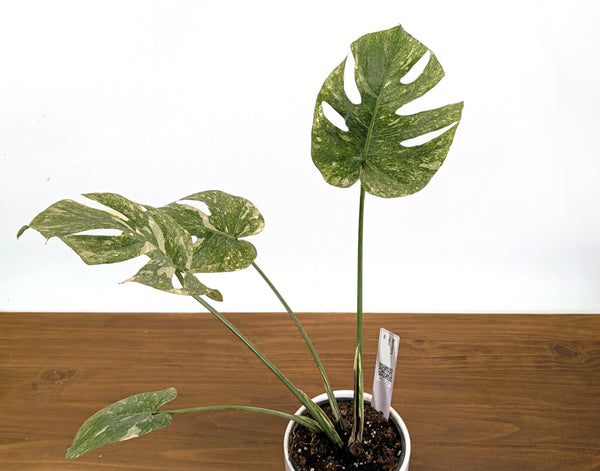
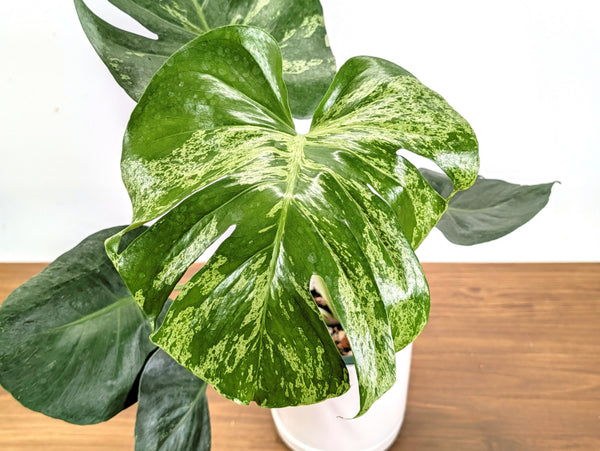
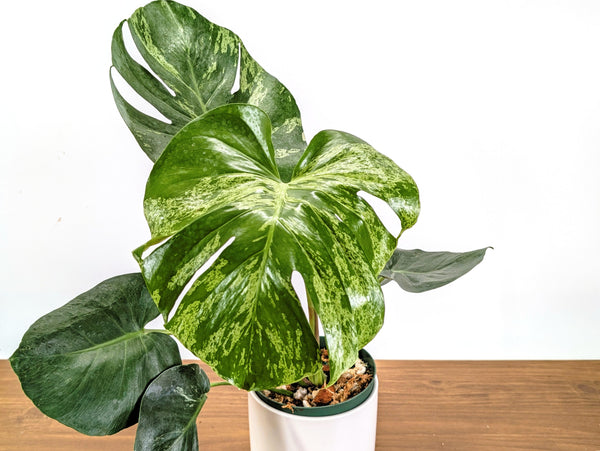
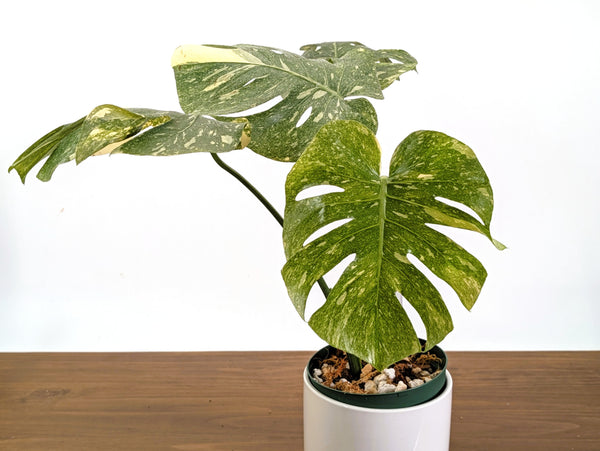
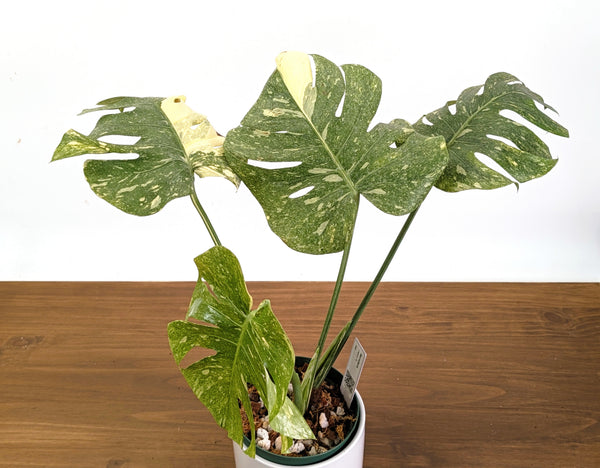
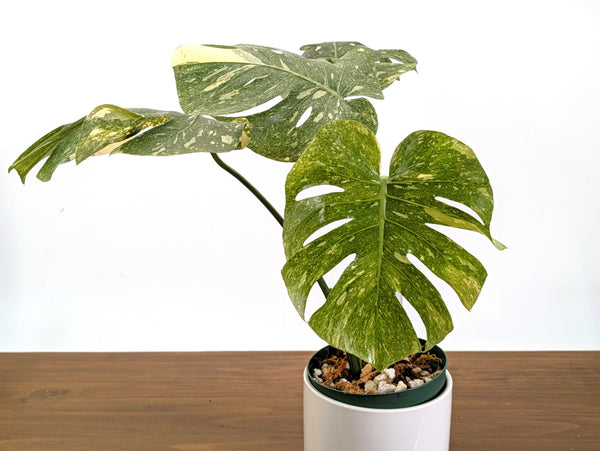
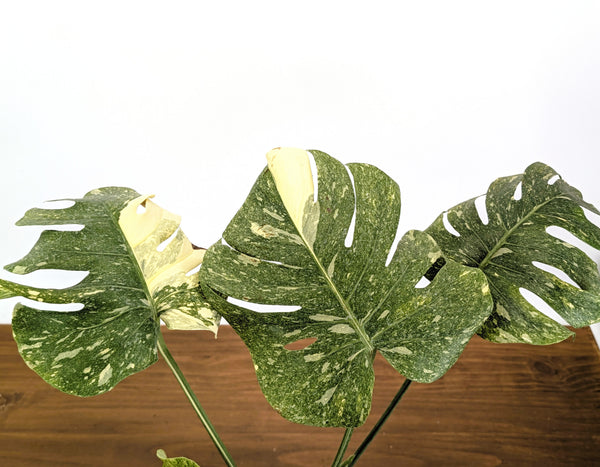
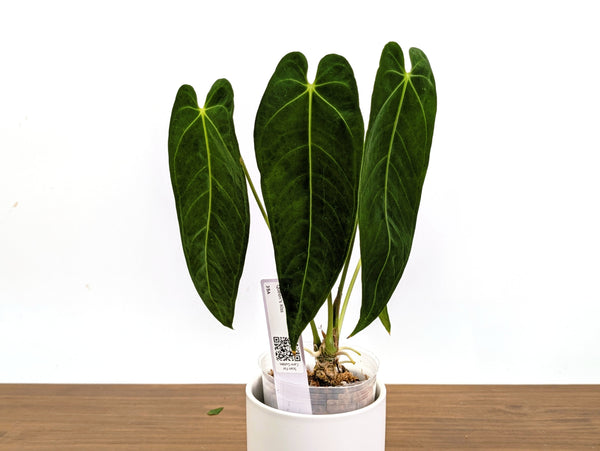
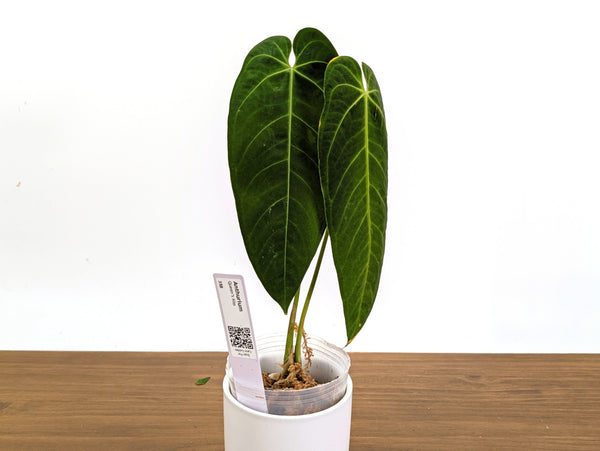
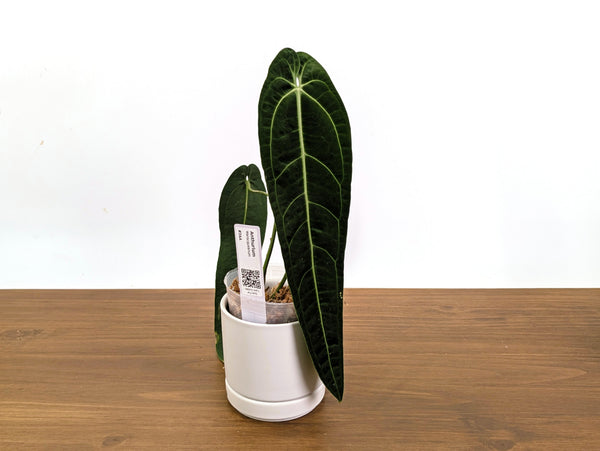
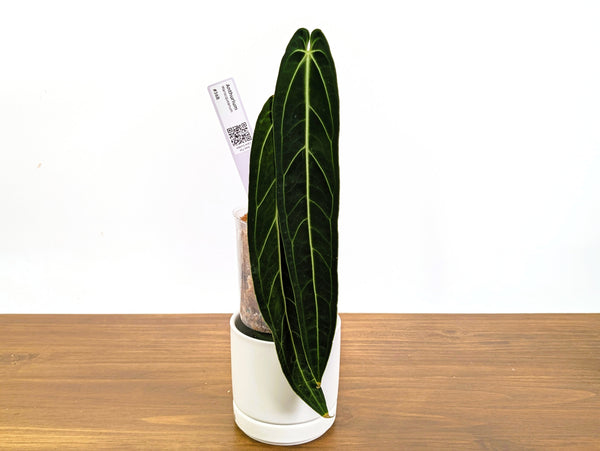
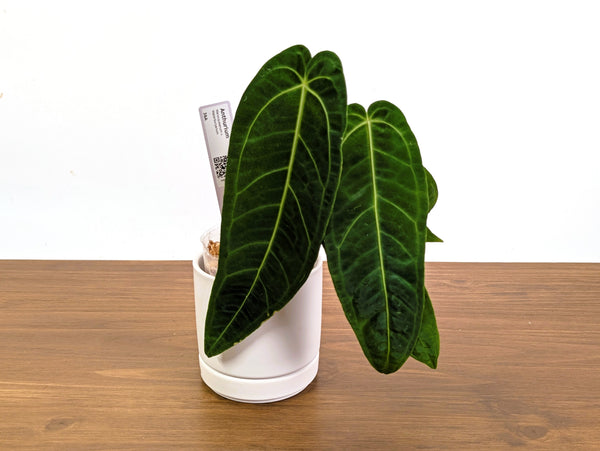
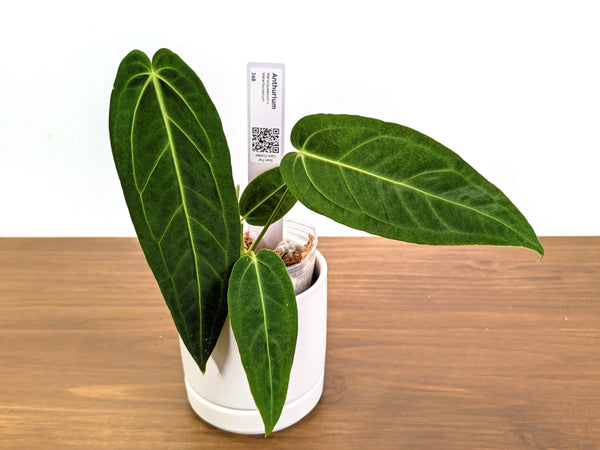
Customers praised this rare hanging plant as "healthy and beautiful" with "expert packaging." Most received thriving specimens, though some noted size concerns - "smaller than the picture indicates" and "less full than advertised." One customer reported possible species misidentification (holtonianum vs paloraense). Despite pricing concerns, shoppers appreciated the quality.
A perfect, healthy and well packaged plant arrived. Thank you very much!! Can't wait for it to flourish! Happy Holidays
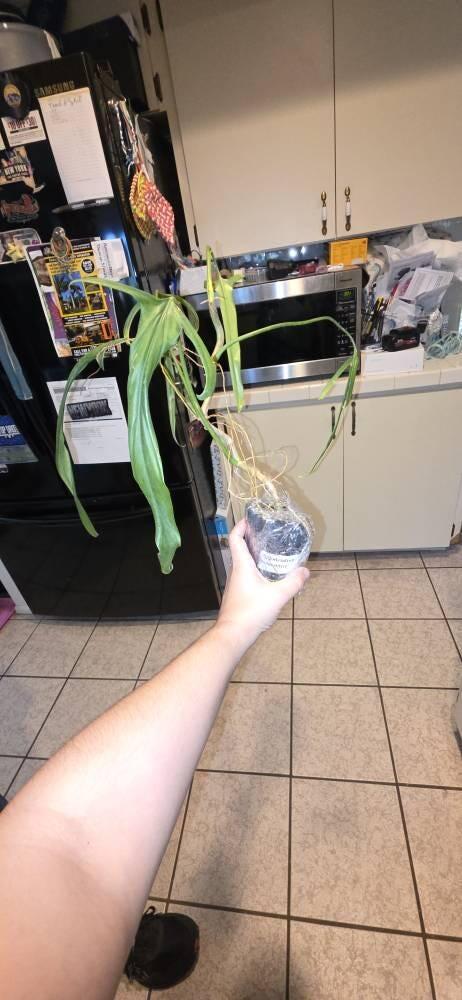
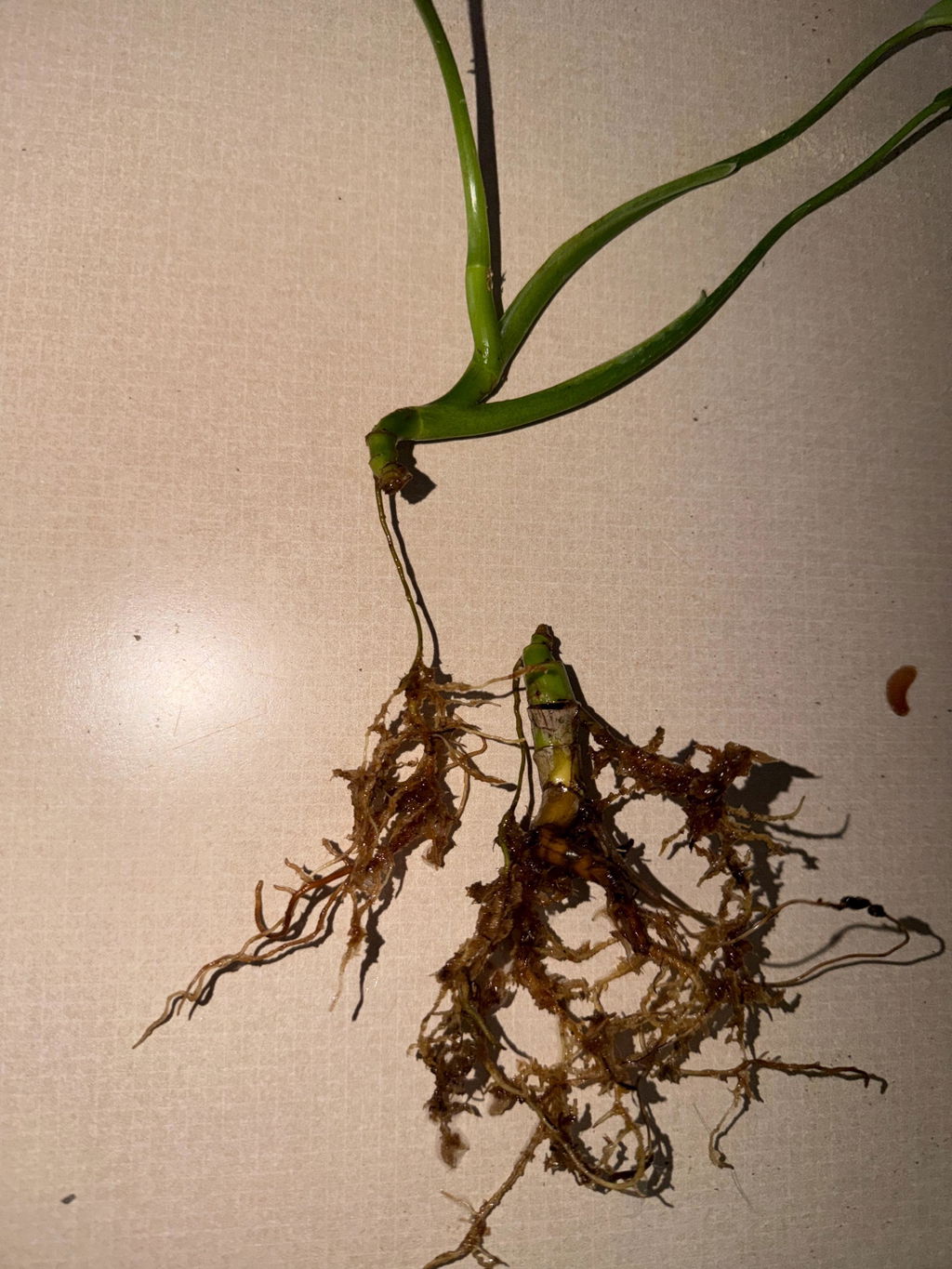
Plant came cut in two
This plant arrived yesterday, and I was thrilled at its size! Very healthy plant. Not my first time buying from this.seller and won't be the last!
Healthy and as described. Expertly packaged.
Beautiful and healthy plant, but most definitely a holtonianum - not a paloraense. At its fair price, wasn’t worth the trouble to complain!
Healthy plant, seems a little small for the price. But does match the description. Will order more .
Smaller than the picture indicates but otherwise a healthy plant. Packaged well and only 1 leaf looked rough but that's to be expected. This is an expensive plant for me and I cant say I'd buy it again but I'm happy with it for the most part.
She's here, she made it safe and sound thank you
Healthy beautiful plant, thank you
Very impressive rare hanging plant
Five stars for shipping and packing. 4 stars for the plant.
Was hoping for it to be more full as advertised. Plant arrived healthy and in good condition otherwise.
I received a beautiful, mature plant. The shipping was timely and the packing was excellent. My full recommendations! Thank you!
Beautiful, healthy, large plant! Very safely packaged. Another great purchase from the Shop shop!
Have ordered numerous plants and all are perfect!