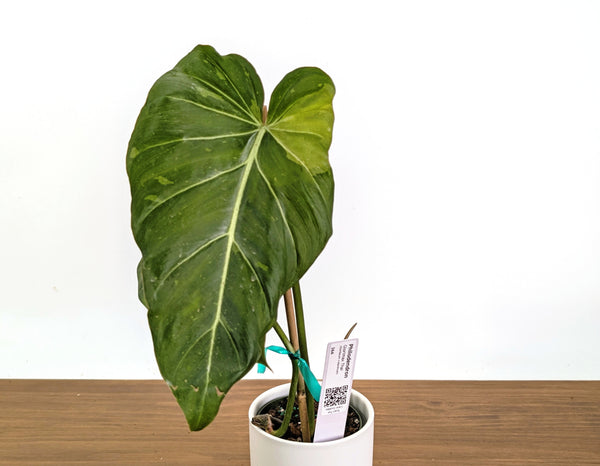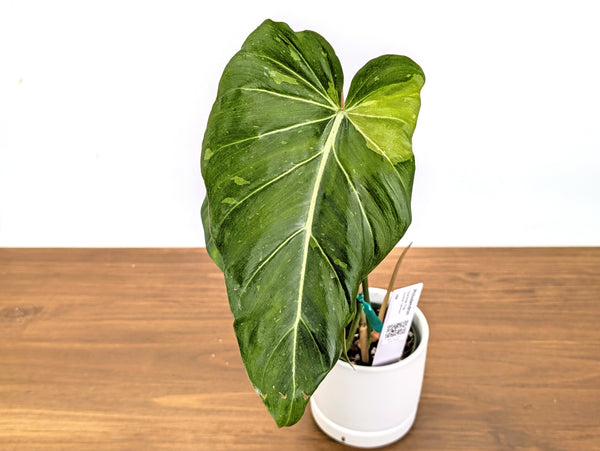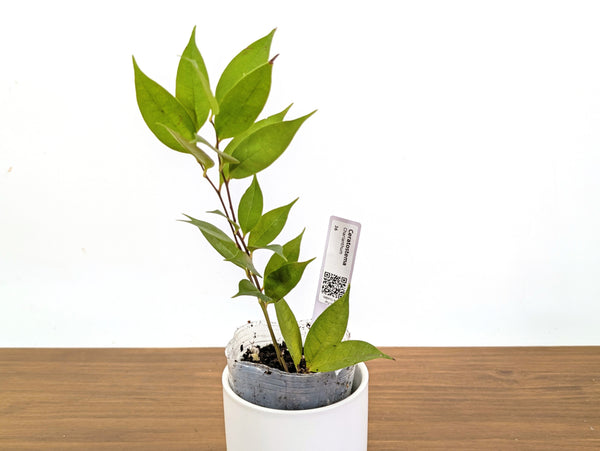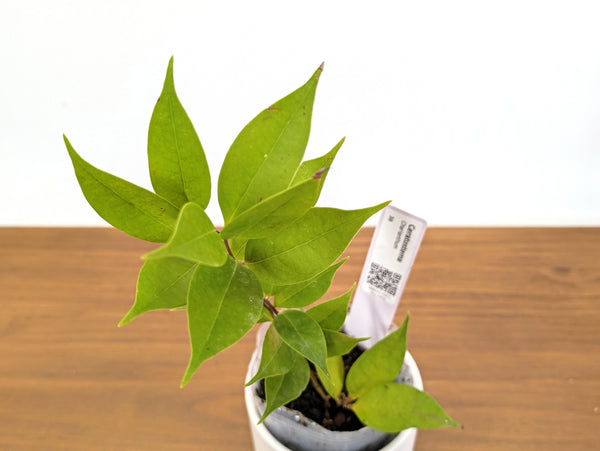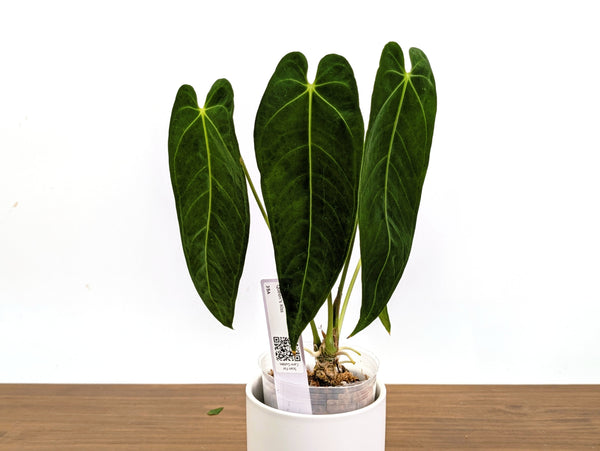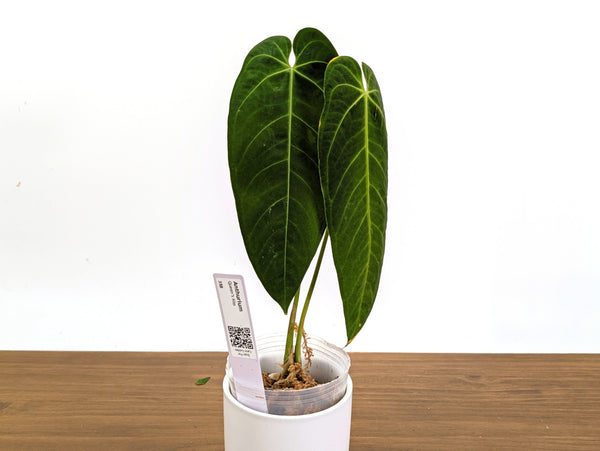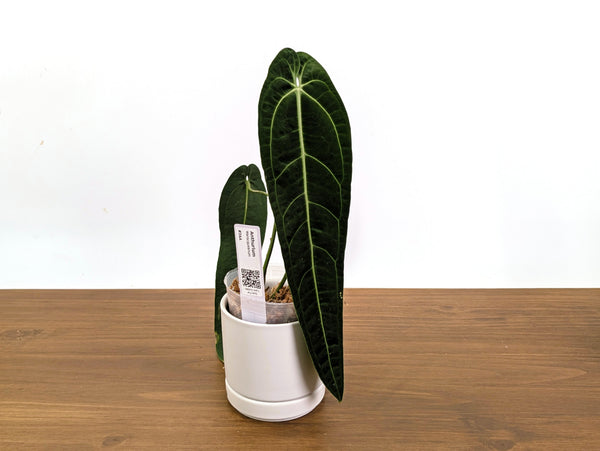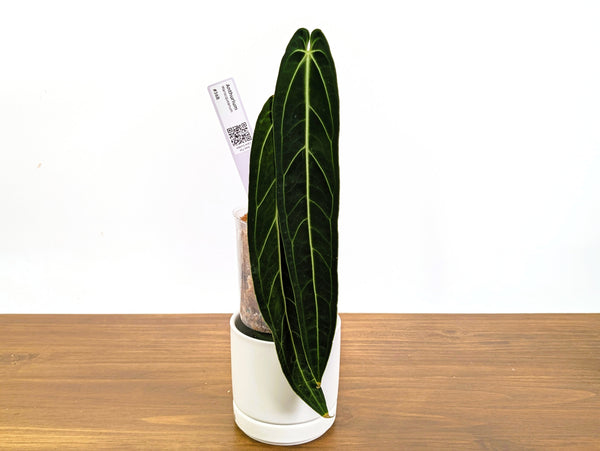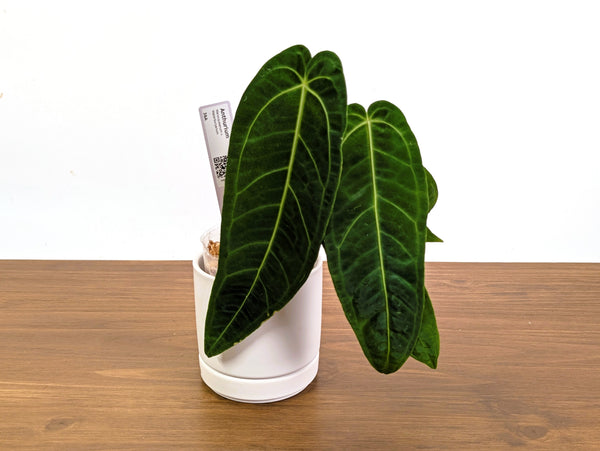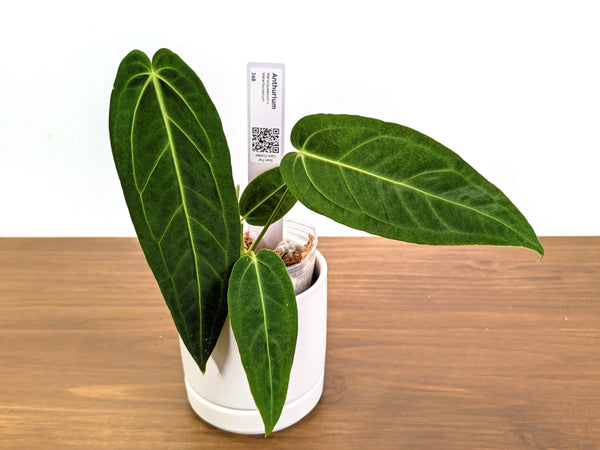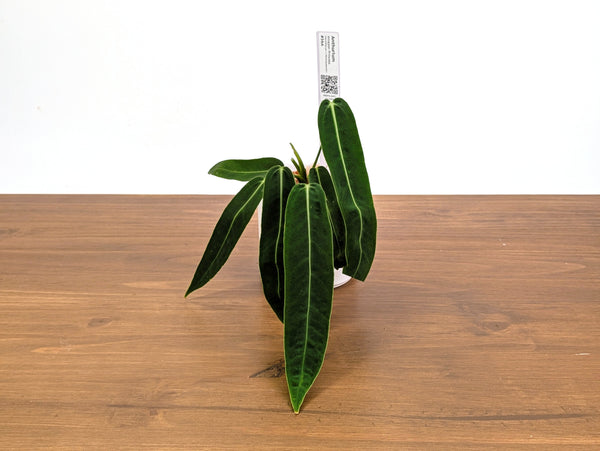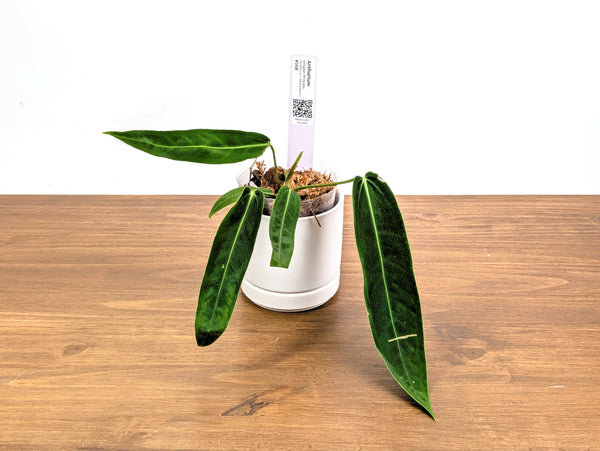
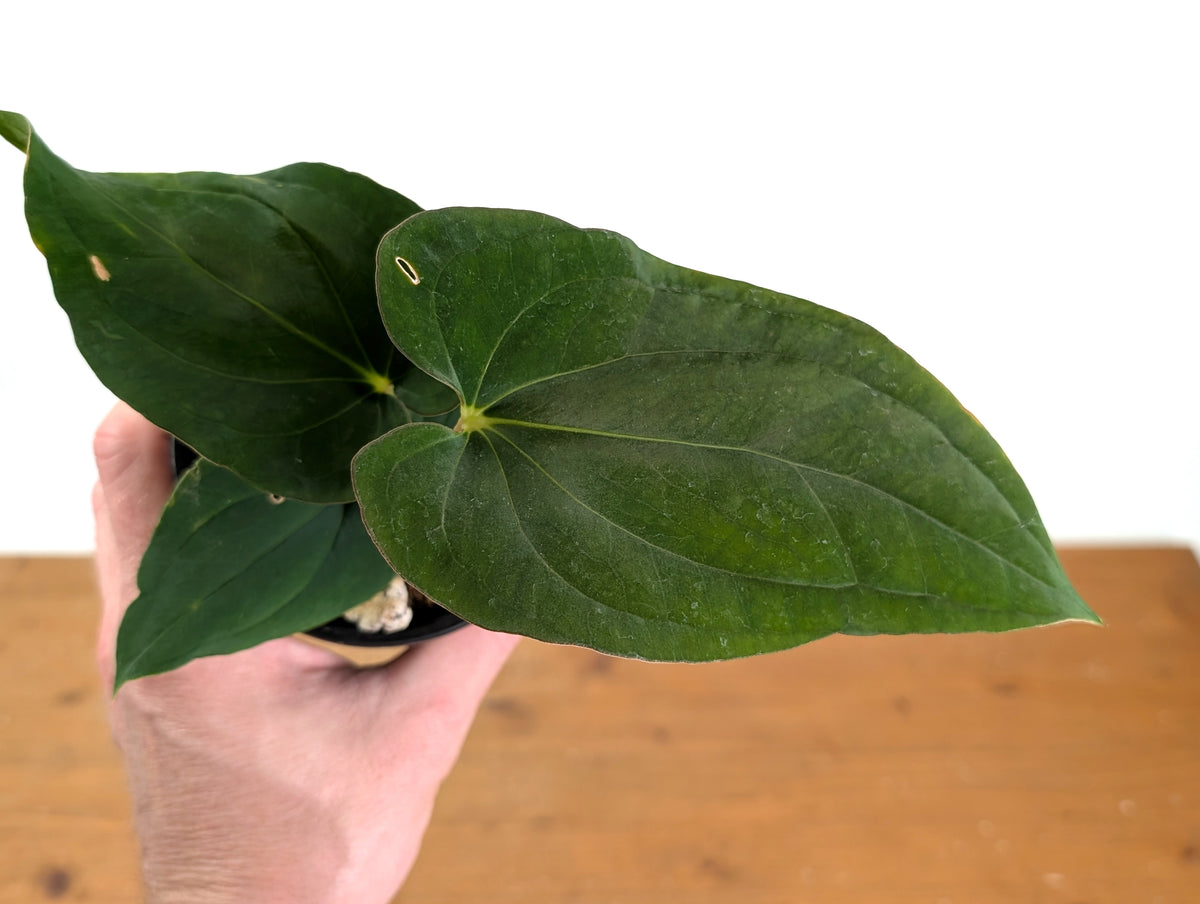
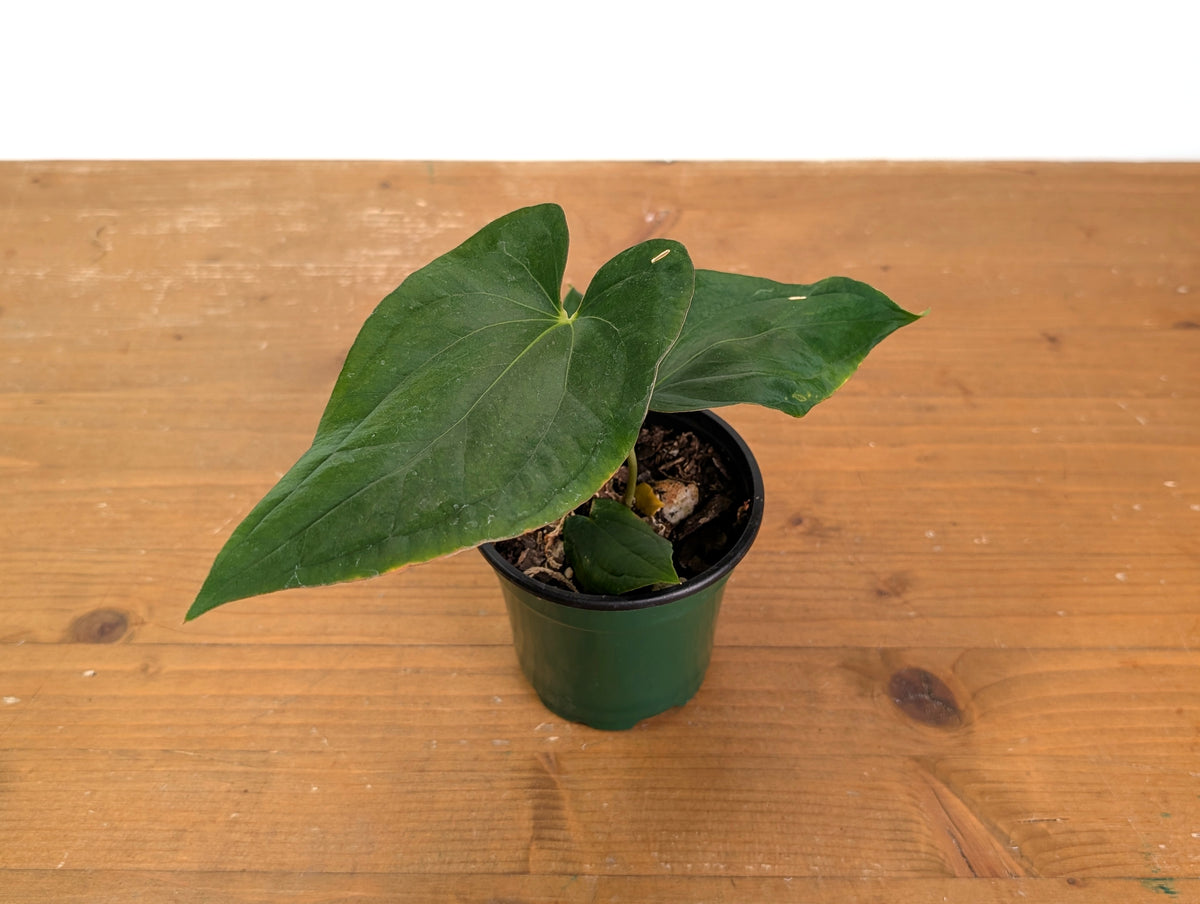
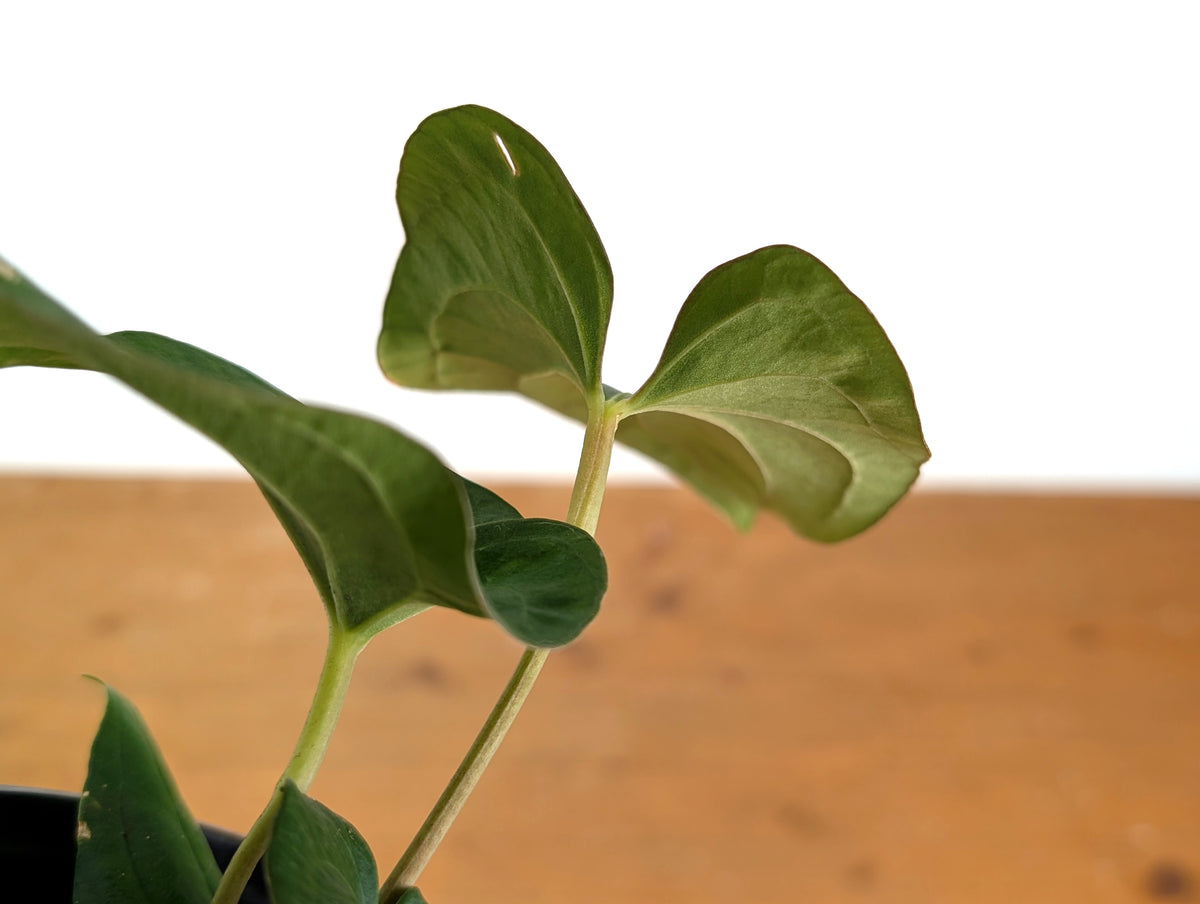

Anthurium Kunayalense × Papillilaminum
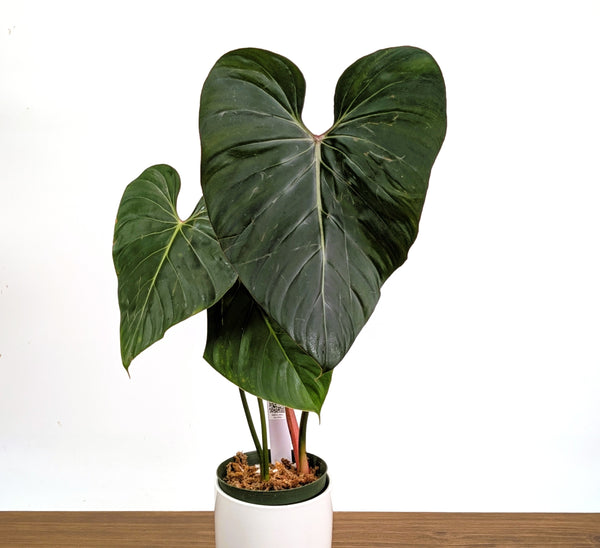
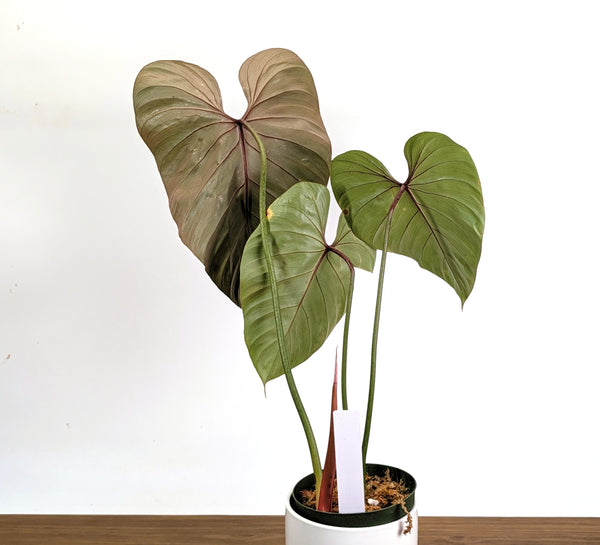
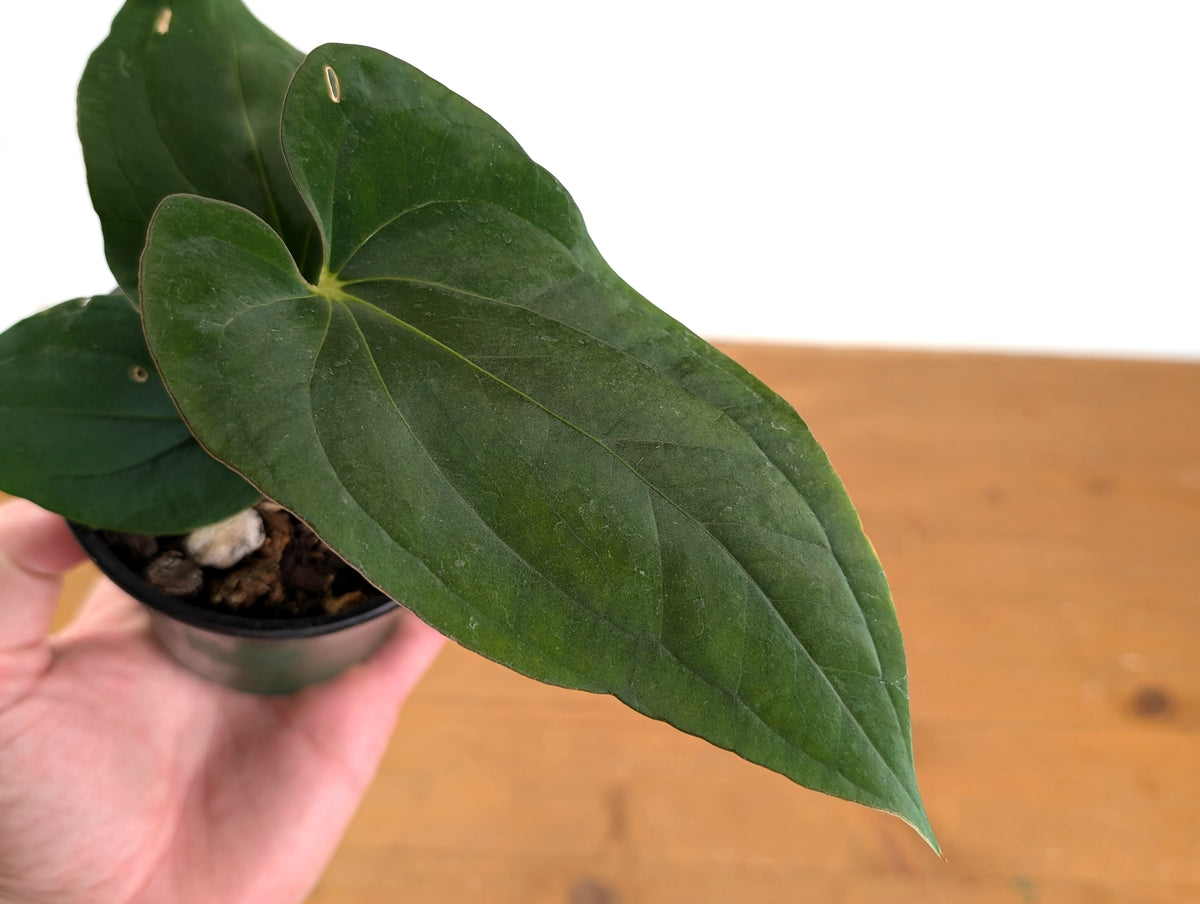
A cross between two compact Panamanian understory velvets that are grown in nearly identical conditions and share enough character to produce coherent, highly desirable offspring while being different enough from each other that the hybrid is genuinely more interesting than either parent alone. Anthurium kunayalense, described by Croat and Vannini in 2010 and named for the Guna Yala region of Panama where Jay Vannini first collected it in 2007, is a compact species notable above all for its nearly circular leaf shape, highly textured subvelvet leaf blades with a subtle bullate quilting and a blue-gray to metallic undertone on hardened leaves, intricately seven- to nine-ribbed winged petioles, and emergent coloration that ranges from metallic pink-brown to, in the best selected clones, a vivid pink with extended pink vein retention as the leaf hardens. Anthurium papillilaminum, its Panamanian and Colombian relative, contributes the opposing character set — larger, more elongated, broadly cordate leaf form, the thick muscular papery-velvet surface quality, and the bold architectural presence that has made papillilaminum one of the most popular velvet anthurium parent species in collector hybridization. The cross produces a hybrid that, from firsthand grower reports, delivers exactly what is expected from these complementary parents: a leaf with the muscular, structured, papillilaminum-style surface presence but carrying the distinctly bullate, quilted three-dimensional texture of the kunayalense parent — a combination of architectural form and surface complexity that neither parent achieves independently. Leaves tend toward narrower than typical papillilaminum, reflecting kunayalense's more compact constitution. Individual seedling expression varies considerably, as with all open seed crosses.
Both parents are low-light Panamanian understory species and the hybrid inherits their preference — grow at lower fc levels than typical velvet anthuriums, in the 150-300 fc range rather than the brighter conditions that suit crystallinum or magnificum crosses. Consistent moisture is important; keep the medium lightly but consistently moist rather than allowing significant dry-out cycles, and never waterlog. Kunayalense in particular is prone to edge desiccation if humidity drops, so high humidity of 70-80%+ is essential — the hybrid shares this sensitivity. Use a very open, airy epiphytic mix of orchid bark, perlite, and coco coir or tree fern fiber. Maintain warm temperatures between 65-80°F with a meaningful day-to-night differential supporting the best emergent coloration. Toxic to humans and pets if ingested.
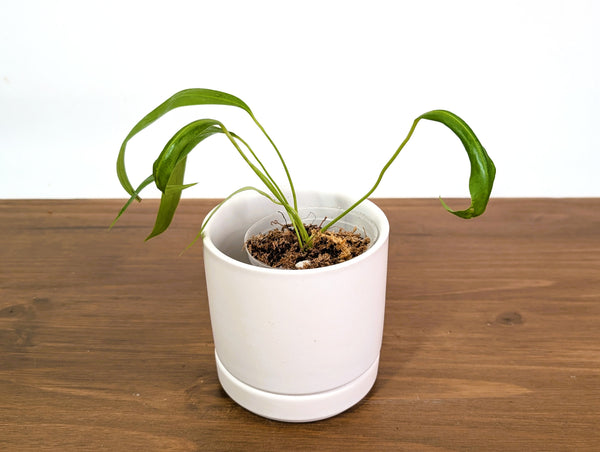
Anthurium Kunayalense x Papillilaminum
Every plant is unique. Your plant will be cared for like it's our own and selected especially for you. Plants may arrive with minor cosmetic imperfections such as creases, tears, or discoloration from shipping stress. Please allow up to 2-3 weeks for your plant to acclimate before repotting.
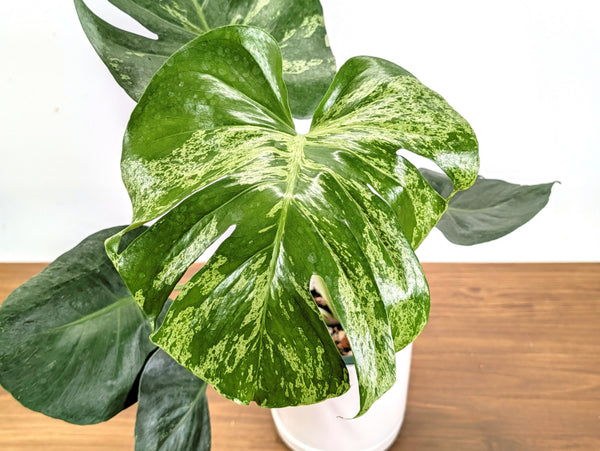
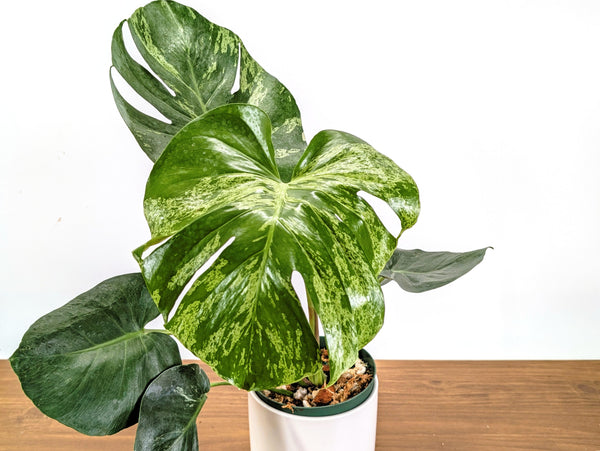
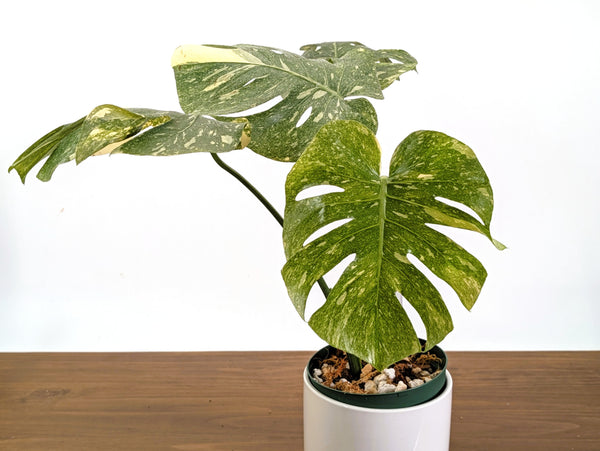
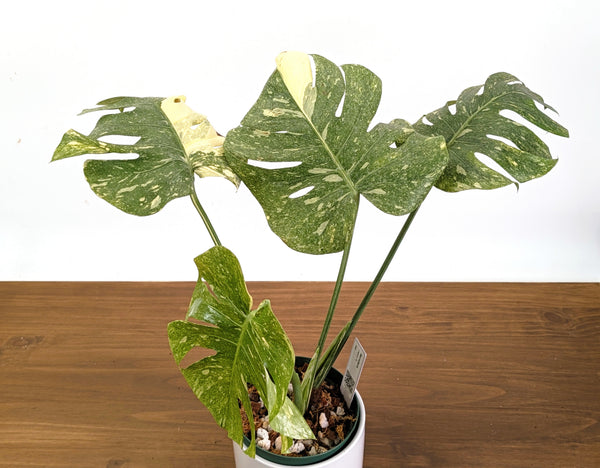
Plants listed as "EXACT" in the title will be the exact plant pictured. Decorative pots pictured are not included, plants ship in plastic nursery pots unless otherwise noted.
Feel free to contact us with any questions before placing your order — we're here to make your experience easy and enjoyable.
Ships in 3–5 business days via UPS Ground. Expedited delivery options are available at checkout. 2 Day Air is recommended for all plant orders outside of southeast USA for safe delivery.
Cold protection packaging is available for orders shipping to colder climates — add it here.